2025-02-26
Establishing of a New Pastoral Outpost on the Lands of Al Mughayyir Village, Northeast of Ramallah
Violation: Establishing of a new pastoral outpost .
Location: Al Mughayyir village, located Northeast of Ramallah .
Date: February, 2025 .
Perpetrating Party: Settlers.
Victims: Farmers in Al Mughayyir village .
Details:
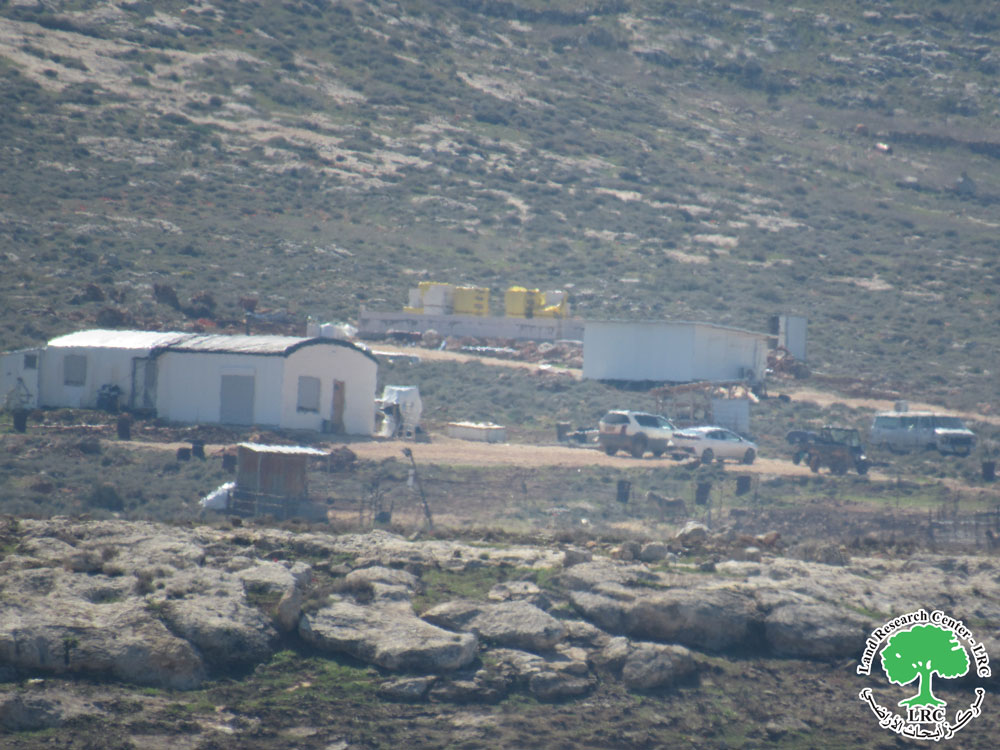
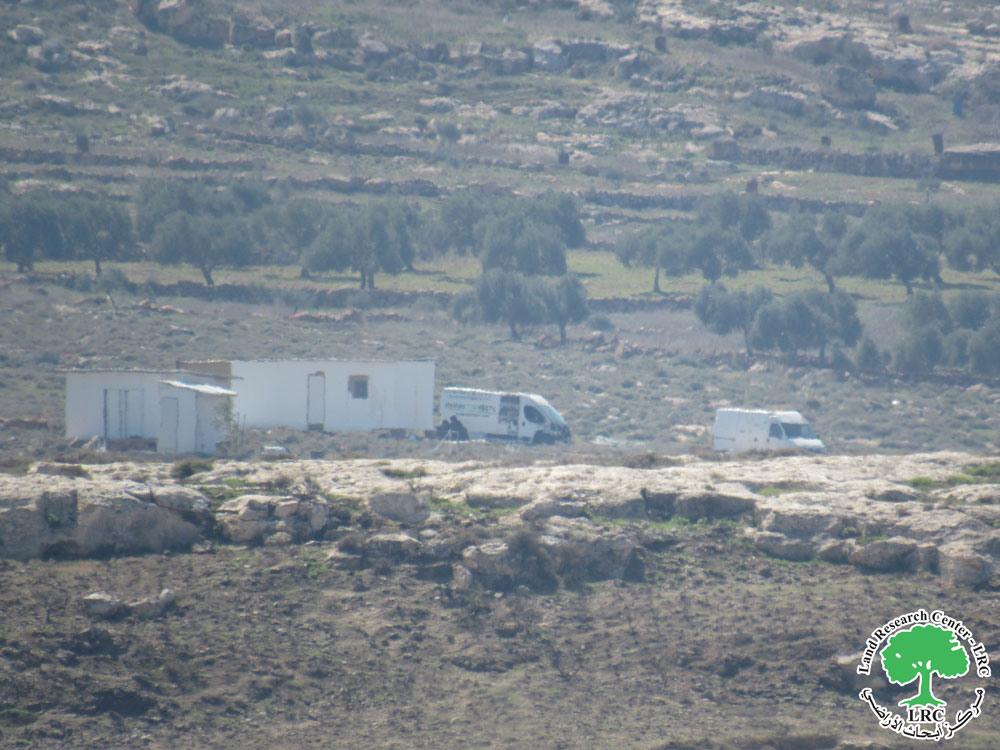
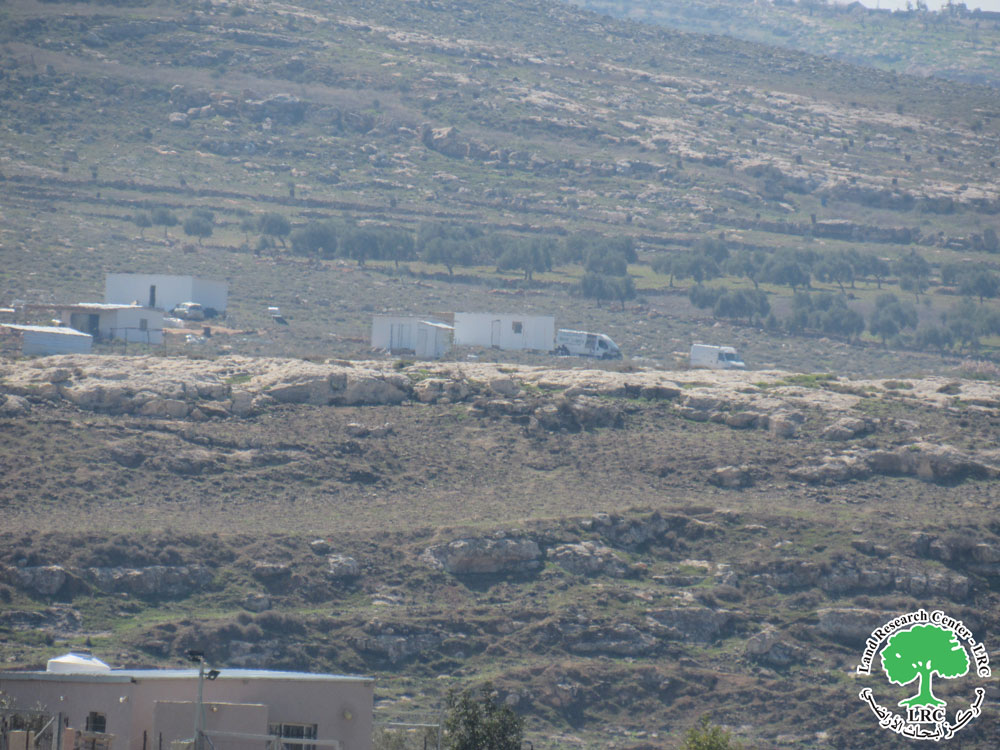
Al Mughayyir village located northeast of Ramallah city, has been witnessing the establishment of a new pastoral outpost in Jebe’it area since the beginning of February 2025. This outpost adds to a number of existing pastoral outpost, located on the village’s land, specifically to the west part.
It is worth mentioning that the new pastoral outpost is the second of its kind in the ‘Jebe’it’ area, east of the bypass road (Aloun Road). Recently, settlers have taken control of a new plot of land, with total area of four dunams, which is classified as’ state land’. They have established four residential units and a sheep pen on the land in preparation for fully controlling the area.
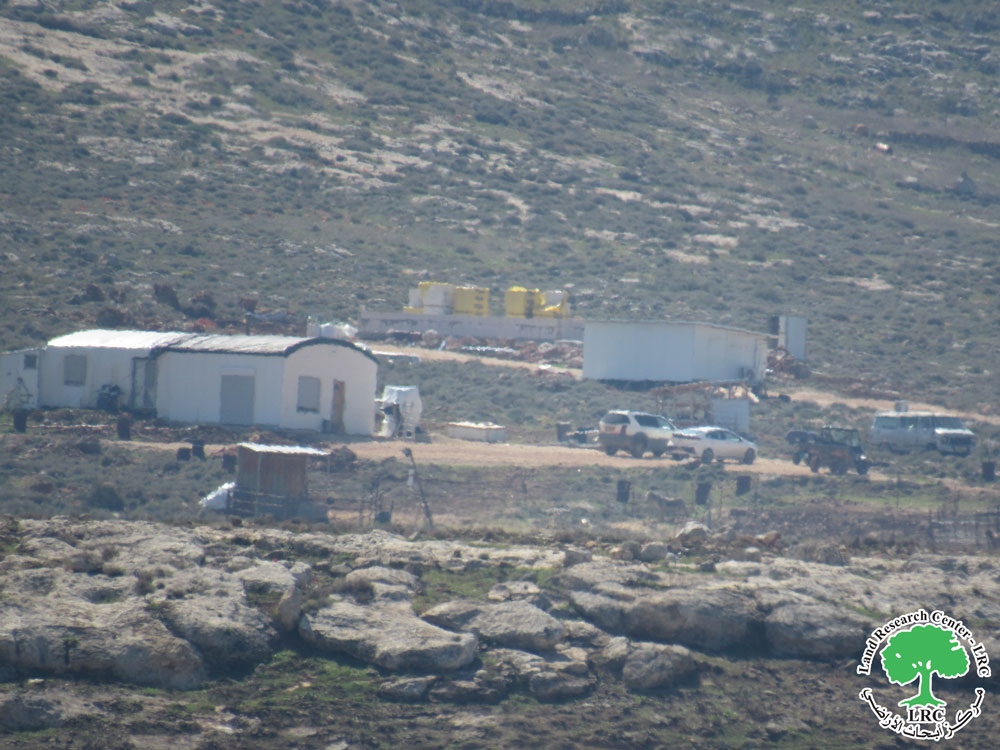
Photos 1-3, A new pastoral outpost
A new pastoral outpost is located about 900 meters away from the first outpost, The Establishment of a new colonial outpost on the lands of Al-Mughayer village in Ramallah Governorate
For his part, the Village Council Member in Al Mughayyir village, Khames Abu Alia, told LRC the following:
‘’We are suffering greatly in Al Mughayyir village due to pastoral outpost that have been established. All of the lands in the village , located to the east of (Alon road) bypass, are completely closed off, and no farmer is able to access them, including the Jebe’it area. This means that no less than 7000 dunams of land have been closed off to farmers, land that was, just two years ago, used as pastures. Today, it is being exploited by the settlers.’’
According to the field research team’s at LRC, the Jebe’it area before the war on Gaza, was inhabited by several farming families. The land was used for agriculture and as pastures for the village residents. However, these families were completely displaced following the declaration of a state of emergency in the West Bank after Gaza war.
Since the establishment of the outpost in 2022, the suffering of the farmers began, and attacks against them started. Recently, in February 2025, the second outpost was established there, west of the first outpost, after the complete displacement of the farmers and residents of Jebe’it area. As a result, the occupation and its settlers have gained control over the entire region. Especially the lands of Jebe’it area, which have been cultivated and used by Palestinians for many decades. Today we can say, that this area has been fully judaized. Adding to the nearby area of ‘Ain al- Rashash’, from which the Bedouin residents were also displaced.
Al Mughayyir[1]
Al Mughayyir is located 30 km to the north east of Ramallah; it is inhabited by around 3,249 people according to the PCBS statistics conducted in 2017.
Most of the village agricultural fields are located in its eastern parts; its total area is 33055 dunums, 501 of which are built-up area.
The Israeli occupation confiscated 37 dunums of Al Mughayyir lands for bypass #458.
According to Oslo Accords, about 95% of the village is under Area C while only 5% is under Area B.
• Area B: 1,695 dunums
• Area C: 31,360 dunums
United Nations General Assembly Resolutions Regarding Settlement:
- The United Nations General Assembly resolution dated 20/12/1972, in which Israel was demanded to cease a number of measures and practices, including (building Israeli settlements in the occupied Arab territories and transferring some civilian population from Israel to the occupied Arab territories).
- The United Nations General Assembly solution dated 15/12/1972, in which the General Assembly requested Israel to cease annexing any part of the occupied Arab territories and establishing settlements in those territories, and transferring population to them.
- The United Nations General Assembly resolution dated 7/12/1973, in which the General Assembly expressed deep concern over Israel's violation of the provisions of the Fourth Geneva Convention of 1949 and all measures taken by Israel to change the features or demographic composition of the occupied territories and considered them violations of international law.
- The General Assembly resolution dated 29/11/1974 in which the General Assembly expressed grave concern about Israel's annexation of some parts of the occupied territories and the establishment of settlements and transfer of population to them.
- The United Nations General Assembly resolution dated 15/12/1975, consisting of four sections, condemned in the first section all measures practiced by Israel in the occupied territories, describing these practices as constituting serious violations of the United Nations Charter and an obstacle to establishing a lasting and just peace in the region, affirming that these measures are null and void, and have no basis in legitimacy.
- The General Assembly resolution issued on 28/10/1977, which affirmed in its first paragraph that all measures and procedures taken by Israel in the Palestinian territories and other occupied Arab territories since 1967 are legally invalid, and constitute a serious obstacle to efforts to achieve a just and lasting peace in the Middle East. The General Assembly also deeply regrets Israel's continuation in implementing these measures, especially the establishment of settlements in the occupied Arab territories.
Land Confiscation Violates International Laws:
What Israel is doing in the occupied Palestinian territories is considered a violation of the Palestinian people's rights and their lands, and a violation of international laws and conventions. The following are the most important texts contained in international laws and treaties that prohibit Israeli settlement in Palestinian territories and prevent interference with civil and public rights and properties in occupied territories, along with relevant United Nations resolutions.
Lahay Convention / 1907:
- Article 46: The occupying power may not confiscate private property.
- Article 55: The occupying power is considered a manager of lands in the occupied country and must treat the country's properties as private property.
Fourth Geneva Convention / 1949:
- Article 49: The occupying power has no right to transfer its citizens to territories it has occupied, or to take any action that leads to demographic change in them.
- Article 53: The occupying forces have no right to destroy individual or collective personal property, or property belonging to individuals, the state, or any authority in the occupied country.
- Article 147: The destruction and appropriation of property not justified by military necessity and carried out on a large scale in an unlawful and arbitrary manner is a grave breach.
مشروع: حماية الحقوق البيئية الفلسطينية في مناطق "ج" SPERAC IV - FCDO
Disclaimer: The views and opinions expressed in this report are those of Land Research Center and do not necessarily reflect the views or positions of the project donor; the Norwegian Refugee Council.
إخلاء المسؤولية: الآراء ووجهات النظر الواردة في هذا التقرير هي آراء ووجهات نظر مركز أبحاث الأراضي ولا تعكس بالضرورة وجهات نظر أو مواقف الجهة المانحة للمشروع؛ المجلس النرويجي. للاجئين