2026-04-13
Tarmus’ayya Plain Turns into a Desert as Continuous Tree Cutting and Repeated Attacks Persist / Ramallah Governorate
Violation: Cutting down and vandalizing 800 olive trees.
Location: Tarmus’ayya town, north of Ramallah city.
Date: 13/04/2026.
Perpetrators: Israeli colonists.
Victims: 15 agricultural families.
Introduction
Tarmus’ayya Plain is located northeast of the Ramallah and Al-Bireh Governorate and forms a natural extension of the town of Tarmus’ayya . It is considered one of the fertile agricultural areas upon which local residents depend for farming and livestock raising. The plain covers approximately 3,000 dunums and is distinguished by its fertile soil and strategic location, making it an important source of income and food security for local residents over the years.
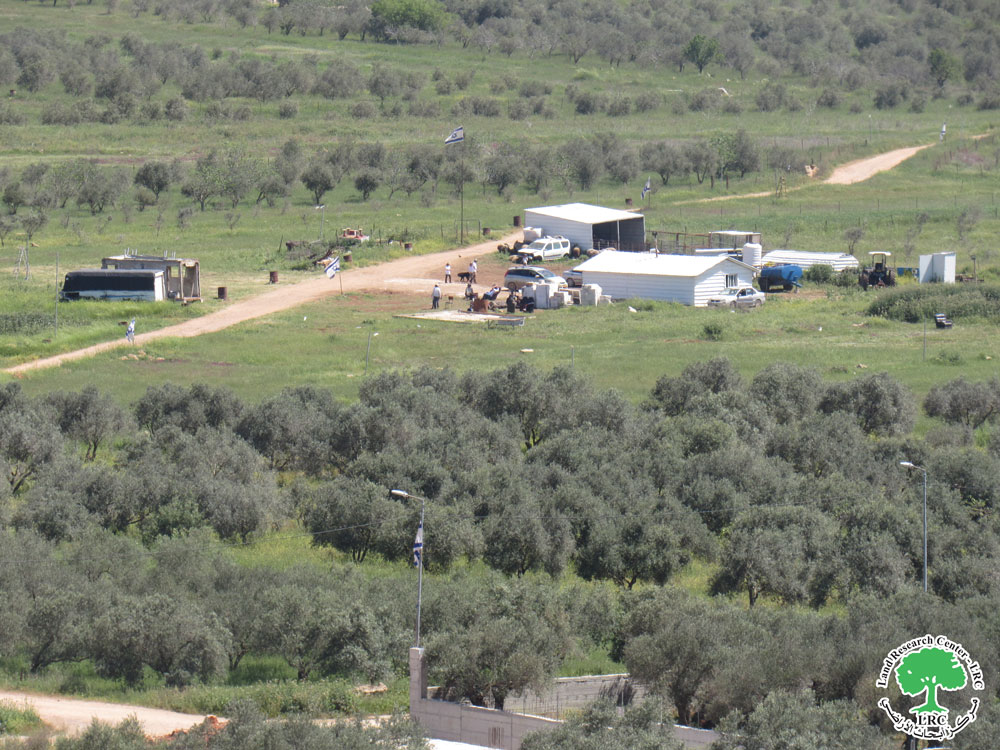
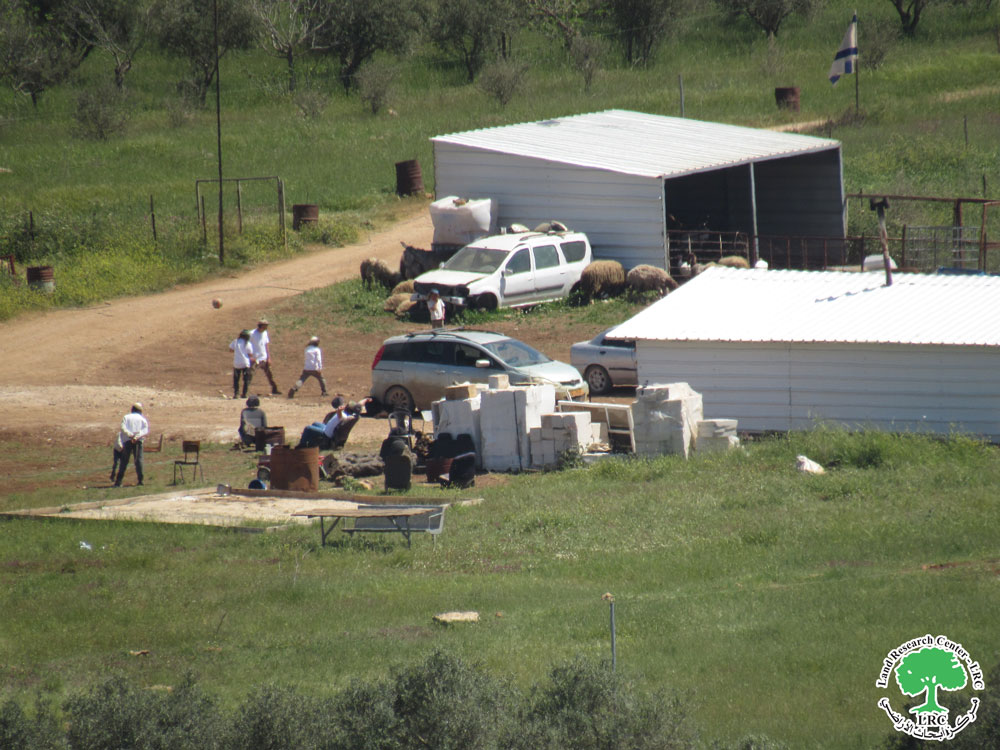
In recent years, the plain has faced increasing difficulties due to ongoing violations carried out by Israeli colonists. These attacks have included the destruction of crops, cutting down trees, and preventing farmers from accessing their lands. In addition, a colonial outpost was established in the area nearly two years ago, increasing tensions and contributing to the escalation of attacks.
Field data indicate the existence of plans aimed at seizing parts of the plain, threatening its future as a primary source of livelihood for the residents of Tarmus’ayya and posing major challenges to farmers striving to preserve their lands and sustain their agricultural activities.
Details:
As part of the ongoing monitoring of violations targeting agricultural lands in the town of Tarmus’ayya , field information indicates a dangerous escalation in attacks targeting Tarmus’ayya Plain, which spans approximately 3,000 dunums and serves as a major source of livelihood for dozens of families in the town.
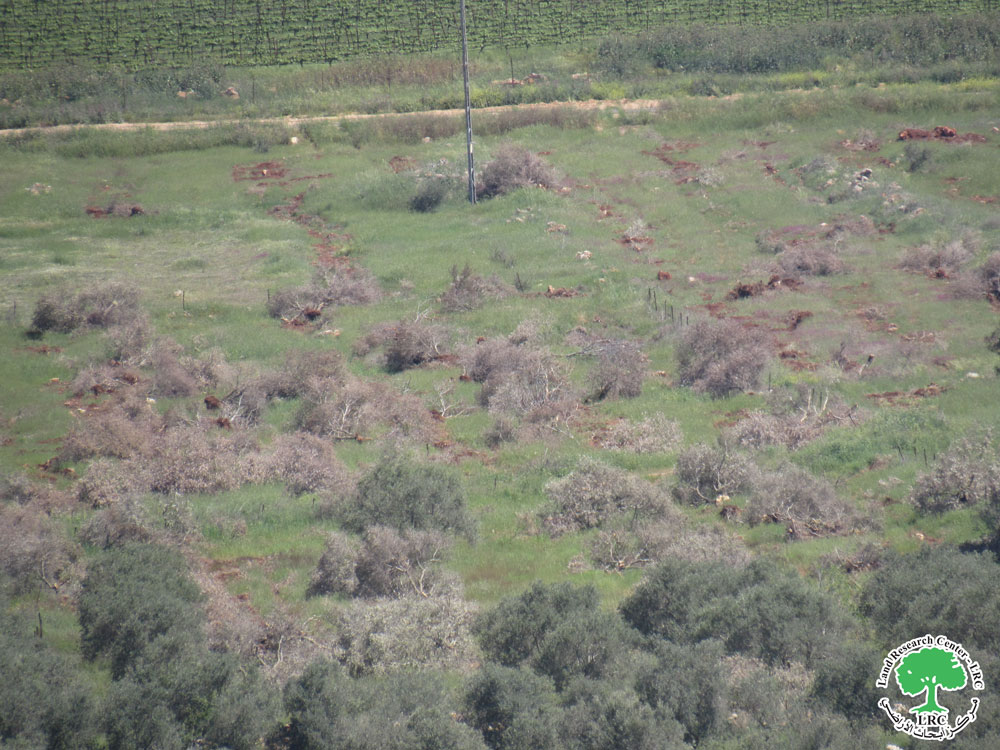
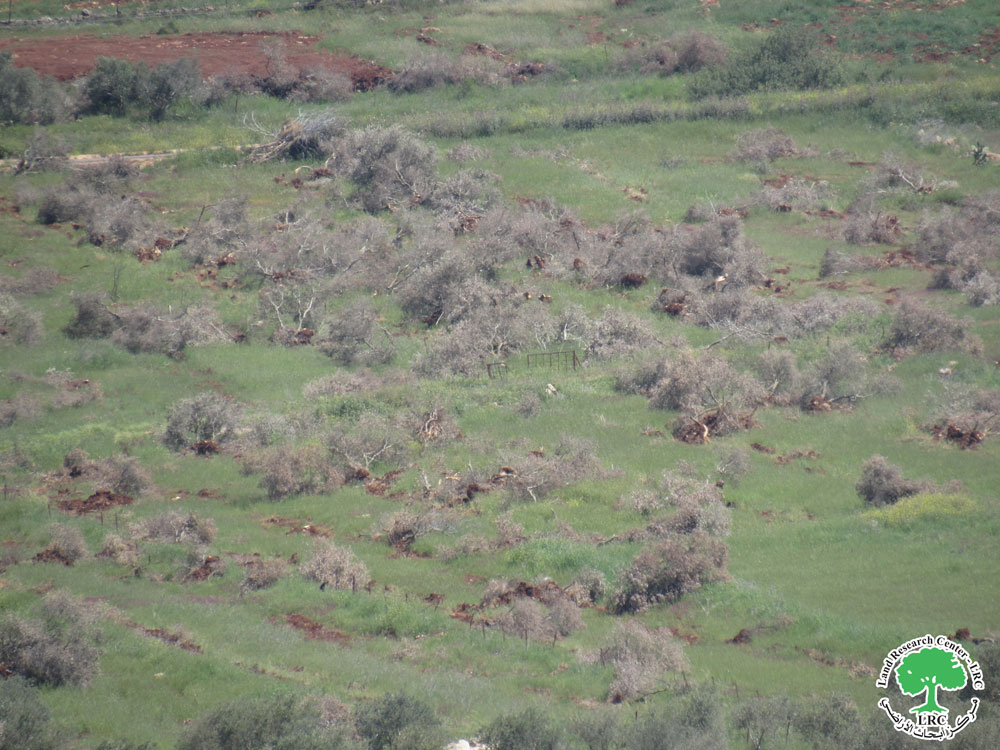
According to recent developments, and following up on a previous attack documented during March as well as another report documented on 23 April 2026, Israeli colonists, using a privately-owned civilian bulldozer and under the protection of the Israeli occupation army, carried out new land leveling operations targeting additional areas of the plain. These actions resulted in the destruction and uprooting of approximately 800 fruitful olive trees estimated to be around 30 years old.
This attack comes in addition to a previous land leveling operation carried out in March, during which nearly 1,000 olive and fig trees were destroyed.
These violations come within the framework of a systematic policy aimed at imposing full control over the lands of Tarmus’ayya Plain, particularly in light of the establishment of a colonial outpost in the middle of the plain nearly two years ago. Such practices pave the way for expanding the sphere of influence of this outpost in the future.
As a result of these continuous violations, more than 150 Palestinian families have been deprived of their right to access and utilize their lands. This constitutes a clear violation of property and labor rights and undermines the livelihoods and stability of the landowners.
The Following Table Shows the Details of the Damages According to the Records of Tarmus’ayya Municipal Council
No. | Affected Farmer | Number of Trees | Family Members | Females | Children |
1 | Naji Ahmad Salameh | 35 | 4 | 1 | 0 |
2 | Ribhi Ahmad Salameh | 100 | 6 | 3 | 1 |
3 | Abdul Qader Awad Hazmeh | 30 | 3 | 2 | 1 |
4 | Suleiman Awad Abdul Qader Hazmeh | 30 | 7 | 5 | 1 |
5 | Nasr Al-Din Mustafa Noufal | 30 | 3 | 2 | 0 |
6 | Lafi Adeeb Shalabi | 60 | 3 | 2 | 1 |
7 | Alia Ali Shalabi | 60 | 7 | 4 | 2 |
8 | Iyad Rateeb Shalabi | 50 | 6 | 2 | 1 |
9 | Samer Ayad Shalabi | 50 | 8 | 4 | 3 |
10 | Mazen Jamal Salameh | 100 | 5 | 3 | 1 |
11 | Marcella Mohammad Ali Noufal | 90 | 1 | 1 | 0 |
12 | Omran Ahmad Salameh Shalabi | 20 | 6 | 4 | 2 |
13 | Suleiman Abdullah Shalabi | 65 | 4 | 2 | 2 |
14 | Hamdi Mahmoud Jabara | 40 | 3 | 1 | 1 |
15 | Awad Jamal Abdullah Hazmeh | 40 | 4 | 1 | 1 |
Total | 800 | 70 | 37 | 17 |
Testimony of Farmer and Activist Wadie Khaled Saleh Dar Awwad – One of the Landowners Affected in Tarmus’ayya Plain
“The recent attack carried out by Israeli colonists, which resulted in the cutting and destruction of around 800 fruitful olive trees, constitutes a grave violation of private property rights and reflects a dangerous escalation in targeting agricultural lands in the area.”
He explained that these trees, which are more than 30 years old, not only represent a primary source of income for the owning families, but also embody a deeply rooted historical connection to the land, inherited by successive generations as part of the town’s agricultural and cultural heritage. He added that the destruction of such a large number of trees represents a direct assault on the history and collective memory of the area, not merely a temporary material loss.
He pointed out that these attacks leave severe economic impacts on residents, especially since more than 150 families rely on agriculture as a primary or partial source of income. He stressed that the continued land leveling and destruction of trees will further undermine livelihoods and increase economic instability in the town.
He also warned that these practices come within a broader context aimed at imposing a new reality on the ground through paving the way for colonial expansion stemming from the outpost established in the middle of the plain, threatening the gradual seizure of more land and depriving owners of access and investment opportunities.
He affirmed that what is taking place in Tarmus’ayya Plain represents a clear violation of fundamental rights guaranteed under international law, including the right to property and the right to work, calling for urgent intervention to stop these violations and provide protection for residents and their lands.
About Tarmus’ayya Town
The town of Tarmus’ayya is located northeast of Ramallah city, approximately 25 km away. According to 2017 statistics, the town’s population was around 2,464 residents. The population mainly belongs to two major families: Awwad and Jabara, in addition to smaller refugee-origin families including Shalabi, Kouk, and Hazmawi.
The total area of Tarmus’ayya is 18,139 dunums, of which 1,350 dunums constitute the built-up area of the town. Its lands are classified into Areas B, covering 11,218 dunums, and Areas C, covering 6,921 dunums. The Israeli occupation has confiscated large areas of land for colonial activities:
- Israeli colonies confiscated 1,023 dunums of the town’s lands for the benefit of the following colonies:
- “Shilo” colony, established in 1978, confiscated 706 dunums of Palestinian land and is inhabited by 1,810 colonists.
- “Mitzpe Rahel” colony, established in 1992, confiscated 317 dunums.
- The occupation authorities also constructed part of Bypass Road No. 60 on the town’s lands, confiscating an additional 12.5 dunums.
Source: Geographic Information Systems Unit – Land Research Center.
مشروع: حماية الحقوق البيئية الفلسطينية في مناطق "ج" SPERAC IV - GFFO
Disclaimer: The views and opinions expressed in this report are those of Land Research Center and do not necessarily reflect the views or positions of the project donor; the Norwegian Refugee Council.
إخلاء المسؤولية: الآراء ووجهات النظر الواردة في هذا التقرير هي آراء ووجهات نظر مركز أبحاث الأراضي ولا تعكس بالضرورة وجهات نظر أو مواقف الجهة المانحة للمشروع؛ المجلس النرويجي. للاجئين