2026-04-22
The Israeli proceeds with land bulldozing and uprooting 811 olive trees in the village of Marda, north of Salfit Governorate
- Violation: Complete uprooting and destruction of 46 olive trees (initial count), later escalating to a total of 811 olive trees.
- Location: Marda village / Salfit Governorate.
- Date: April 2026.
- Perpetrators: Israeli army.
- Victims: More than 39 Palestinian families from the village.
Details:
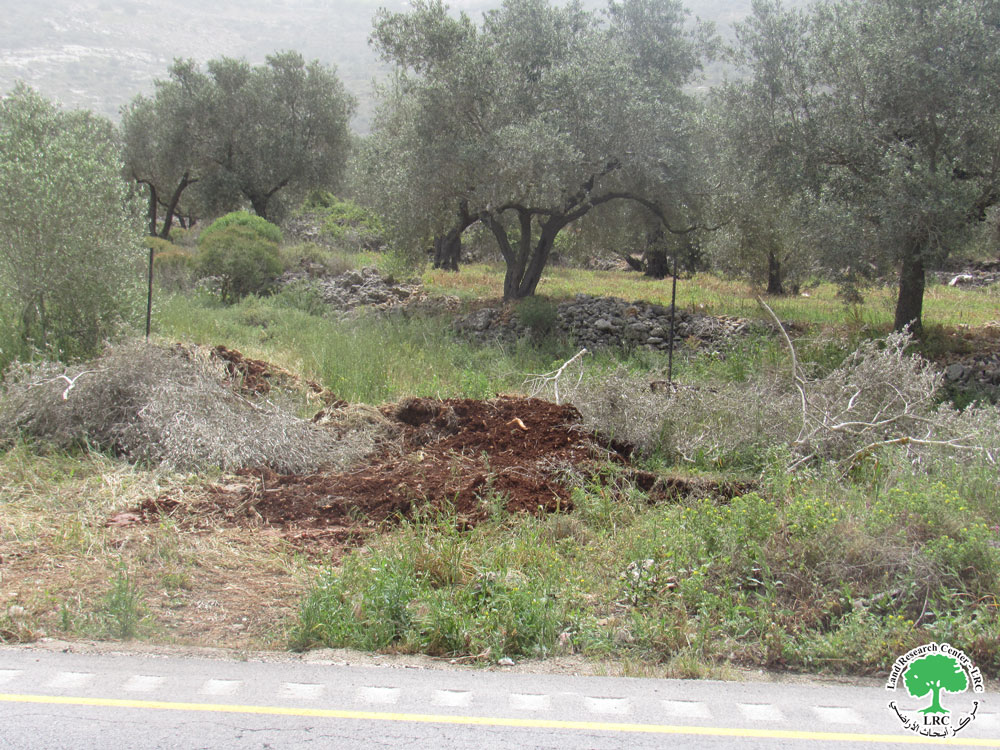
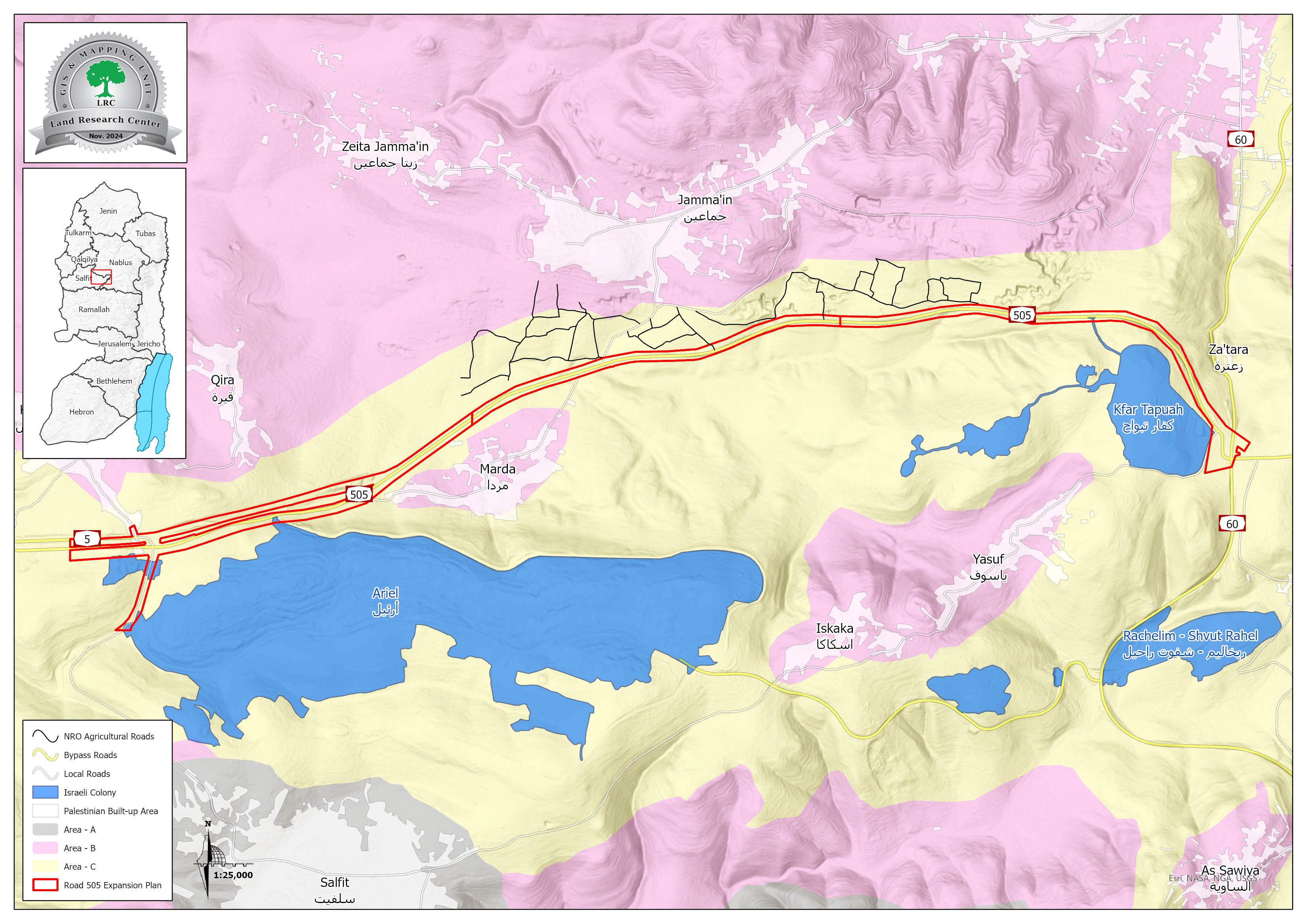
The village of Marda, located east of Salfit, witnessed a large-scale targeting of its agricultural lands, particularly those adjacent to the colonial bypass road known as Route “505” Route 505.
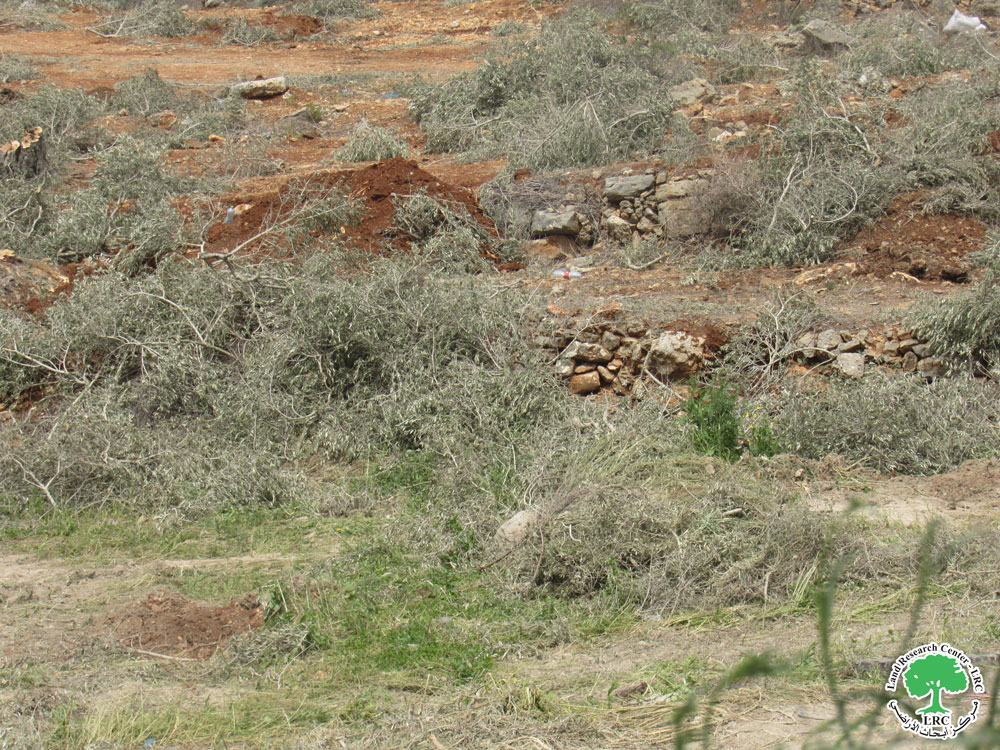
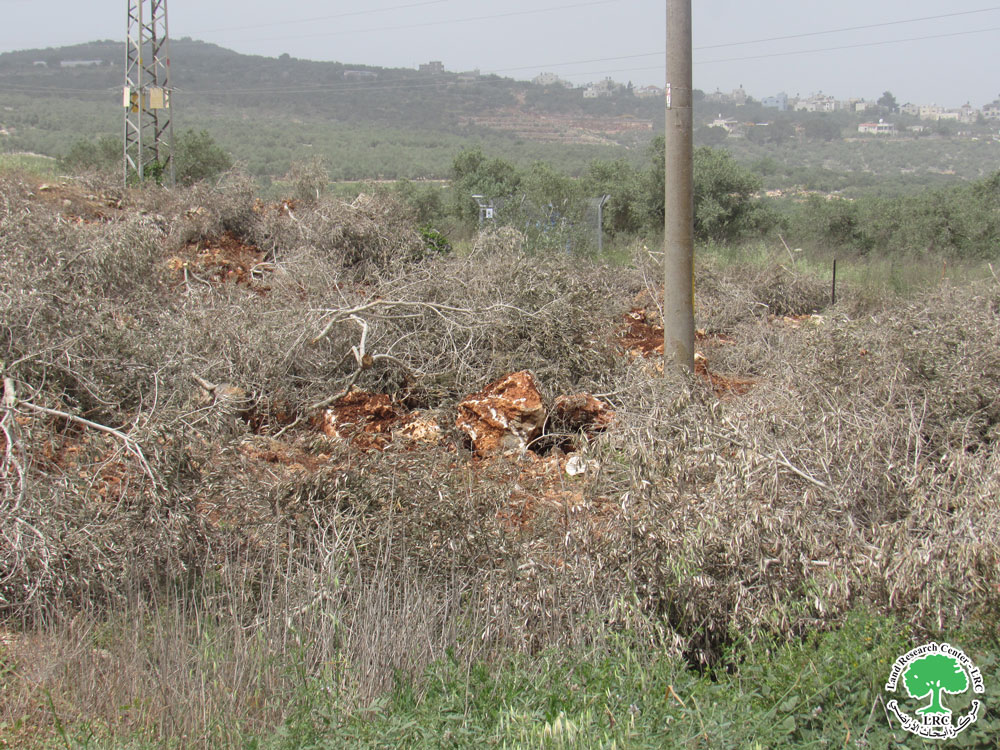
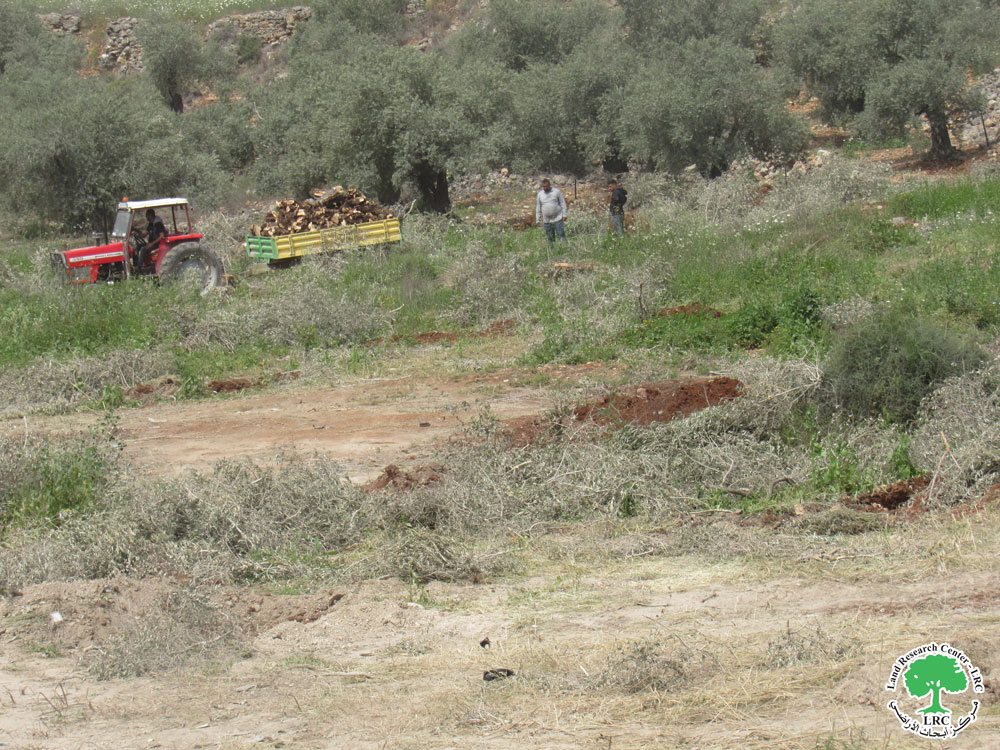
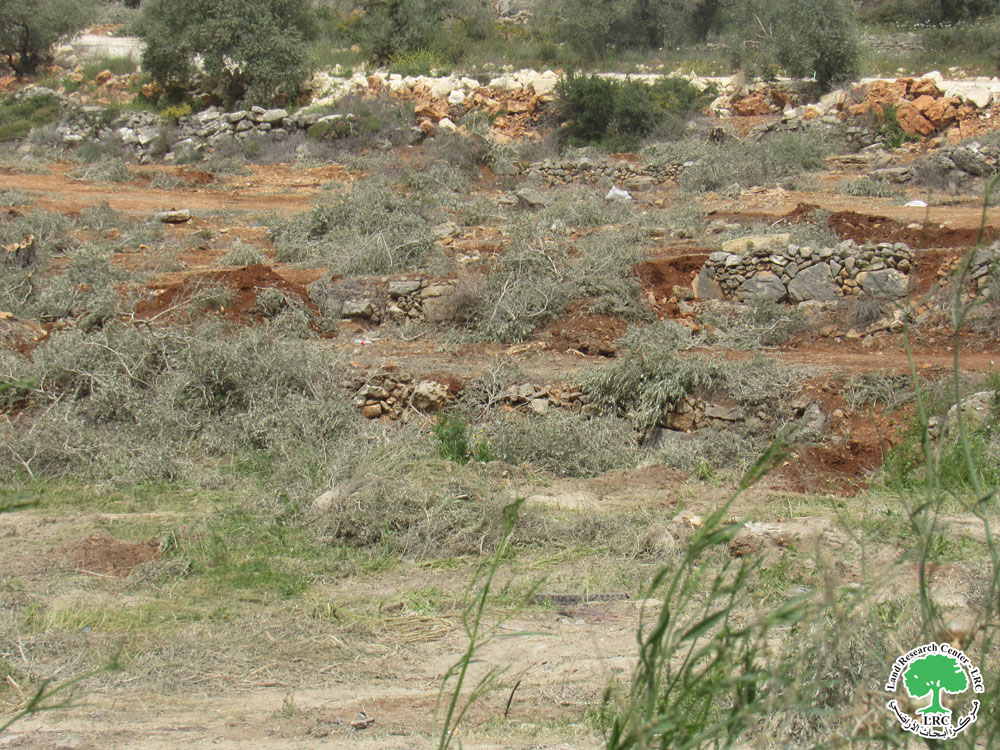
Since early April 2026, Israeli authorities accompanied by three Israeli civilian bulldozers carried out extensive bulldozing operations affecting approximately 46 dunums of land. These lands are located along the bypass roads on Marda’s territory. The operation resulted in the uprooting and destruction of 811 productive olive trees, which were completely eliminated during the bulldozing works.
Impact on families
The uprooted trees belong to more than 39 families in the village, who depended heavily on them for olive oil production each season. The bulldozing also included the destruction of soil layers, retaining walls, and full agricultural infrastructure on the affected plots.
This attack is considered the first phase in implementing a plan to expand a segment of Route 505 by 3 km, extending from the entrance of Kifl Haris to the so-called “Tafuh Roundabout” on the lands of Yasuf, passing through several villages in Salfit Governorate.
An Israeli military order dated 13/10/2024 was previously issued under the title: “Order Concerning Seizure of Land Rights – Regulation and Expansion of Route 505,” signed by the Civil Administration. The current works are a direct implementation of that order.
Testimony from the village council head
Farmer Falah Ahmad Ibdah, head of the Marda Village Council, stated:
“With deep pain and sorrow, the occupation has bulldozed and uprooted a total of 788 olive trees… these are among the most fertile and productive trees in the region.”
He emphasized that these trees were not merely agricultural assets but a primary source of livelihood for families facing unemployment, movement restrictions, and difficult living conditions.
He further explained that the olive trees provided high-quality oil and were essential for both household consumption and economic survival.
He added that these trees represent steadfastness and identity, symbolizing the historical connection between farmers and their land, and are a form of resistance against land confiscation and agricultural destruction carried out by Israeli colonists.
Table of victims (translated)
# | Name | Plot / Location | Parcel | Trees Uprooted | Family Members | Women | Children |
1 | Talal Afif Fayez Khafsh | Khillat Al-Kabara (9) | 49 | 9 | 9 | 4 | 2 |
2 | Inas Afif Fayez Khafsh | Khillat Al-Kabara (9) | 52 | 19 | 3 | 2 | 0 |
3 | Abdulrahman Riyad Fayez Khafsh | Malh Al-Ghoul (3) | 91 | 29 | 7 | 4 | 2 |
4 | Qasim Abdulmajeed | Sira Imran (30) | — | 9 | 2 | 1 | 0 |
5 | Salah Mahmoud Asfour Abu Shamma | Sira Imran (30) | — | 55 | 8 | 5 | 3 |
6 | Basem Abdulhafez Khafsh | Malh Al-Ghoul (3) | 1 | 20 | 4 | 1 | 2 |
7 | Mohammed Abdulqader Mohammed Saeed | Sira Imran | 9 | 25 | 6 | 3 | 2 |
8 | Amjad Abdullah Hassan Haj Ali | Sira Imran (30) | 17 | 10 | 8 | 3 | 5 |
9 | Multiple families (Rohhi Shوقي family group) | Al-Malaeb (10) | 60 | 20 | 33 | 8 | 6 |
10 | Amjad Mohammed Ahmed Qasim | Sira Imran / Malh Al-Ghoul | 6+7+8 | 20 | 5 | 1 | 3 |
11 | Ra’fat Khafsh | Khillat Al-Kabara / Al-Malaeb | 83 / 15 | 46 | 4 | 2 | 2 |
12 | Hanan Afif Fayez Khafsh | Khillat Al-Kabara (9) | 51 | 15 | 3 | 2 | 0 |
13 | Ahmad Adel Ahmad Haj Ali | Malh Al-Ghoul (3) | 17 | 50 | 9 | 5 | 3 |
14 | Sawsan Adel Ahmad Haj Ali | Malh Al-Ghoul (3) | 19 | 11 | 7 | 4 | 2 |
15 | Wael Mahmoud Haj Ali | Malh Al-Ghoul (3) | 18 | 10 | 6 | 4 | 2 |
16 | Jamal Afif Fayez Khafsh (4 dunums without trees) | Khillat Al-Kabara (9) | 20 | 0 | 2 | 1 | 0 |
17 | Yusra Yusuf Bakr Awad / Khatam Yusuf Bakr Awad | Malh Al-Ghoul (3) | 5 | 15 | 2 | 2 | 0 |
18 | Nizam “Mohammed Walid” Khafsh (1.5 dunums without trees) | — | — | 0 | 6 | 3 | 2 |
19 | Mahmoud Mohammed Ibdah / Samir Mohammed Ibdah | Khillat Al-Kabara (9) | 6 dunums | 140 | 11 | 5 | 6 |
20 | Noman Mamhoud Mahmoud Khafsh | Janayin Sha‘la / Malh Al-Ghoul | 107 / 32 | 15 | 4 | 3 | 2 |
21 | Nesfat Hafiz Abdulhafez Khafsh | Khillat Al-Kabara / Al-Malaeb / Janayin Sha‘la | 74 / 131 | 33 | 4 | 2 | 0 |
22 | A’smat Hafiz Abdulhafez Khafsh | Sira Imran (30) | 21 | 36 | 6 | 2 | 1 |
23 | Yasser Talat Rifat Khafsh (1000m retaining walls) | Al-Malaeb / Janayin Sha‘la / Sira Imran | 38 / 30 / 4 | 31 | 3 | 1 | 0 |
24 | Abdulmajeed “Mohammed Saeed” Saeed | Malh Al-Ghoul (3) | 28 | 16 | 5 | 2 | 1 |
25 | Mujib Al-Rahman Madhah Mahmoud Khafsh | Al-Malaeb (10) | 71+72 | 47 | 4 | 2 | 0 |
26 | Basla Talat Rifat Khafsh | Janayin Sha‘la | 99 | 30 | 3 | 1 | 1 |
27 | Mufid Mahmoud Omar Hamad | Malh Al-Ghoul (3) | 30 | 20 | 7 | 4 | 2 |
28 | Qusay Adnan Motie Khafsh | Al-Maqtala | — | 20 | 4 | 3 | 0 |
29 | Osama Mustafa Madhah Khafsh | Al-Maqtala | — | 20 | 4 | 1 | 1 |
30 | Hala Othman Hamdan Khafsh | Haradin (60) | 215 | 15 | 1 | 1 | 0 |
31 | Tamer Aed Ali Ibdah | — | — | 25 | 6 | 3 | 1 |
Total | 811 | 186 | 85 | 51 | |||
It should be noted that the section targeted by the occupation is actually a continuation of a previous 6 km expansion carried out in 2010. Today, the occupation announces the expansion of a new section at the expense of olive groves and wooded lands in the villages and towns of Salfit Governorate. This expansion effectively serves the purposes of colonization and the development of the Ariel colony, which sits on lands of the governorate.
According to published reports and official plans, the occupation intends to double the area of the Ariel colony by adding new neighborhoods at the expense of surrounding village lands. Therefore, the expansion of the bypass road Route 505 primarily aims to meet the natural population growth of the colony and to accommodate subsequent development projects.
Environmental impact of tree uprooting
1. Soil degradation
Trees stabilize the soil with their roots. When removed, the land becomes vulnerable to erosion by rain and wind.
- This leads to a loss of soil fertility and gradual transformation into barren, less productive land.
2. Loss of biodiversity
Trees, especially olive trees, are habitats for many species (birds, insects, and microorganisms).
- Their removal causes these species to disappear or migrate, disrupting the ecological balance.
3. Increased desertification and rising temperatures
Trees play a role in moderating the local climate by providing shade and reducing heat.
- Their removal results in:
- Higher temperatures in the area
- Lower humidity
- Increased signs of desertification
It is worth noting that bulldozing operations are also ongoing in the village of Kifl Haris for the purpose of expanding a colonial road, including the uprooting of 495 olive trees in April 2026.
مشروع: حماية الحقوق البيئية الفلسطينية في مناطق "ج" SPERAC IV - GFFO
Disclaimer: The views and opinions expressed in this report are those of Land Research Center and do not necessarily reflect the views or positions of the project donor; the Norwegian Refugee Council.
إخلاء المسؤولية: الآراء ووجهات النظر الواردة في هذا التقرير هي آراء ووجهات نظر مركز أبحاث الأراضي ولا تعكس بالضرورة وجهات نظر أو مواقف الجهة المانحة للمشروع؛ المجلس النرويجي. للاجئين