2026-04-26
Destruction of Water Infrastructure in Al-Baqi‘a Plain: A Direct Targeting of the Agricultural Sector and Environment in the Northern Jordan Valley / Tubas Governorate
Violation: Destruction of water transmission pipelines.
Location: Al-Baqi‘a Plain, east of Atouf village / Tubas Governorate.
Date of Violation: April 2026.
Perpetrator: Israeli Occupation Forces.
Victims: Landowners and farmers benefiting from the water networks.
Details of the Violation
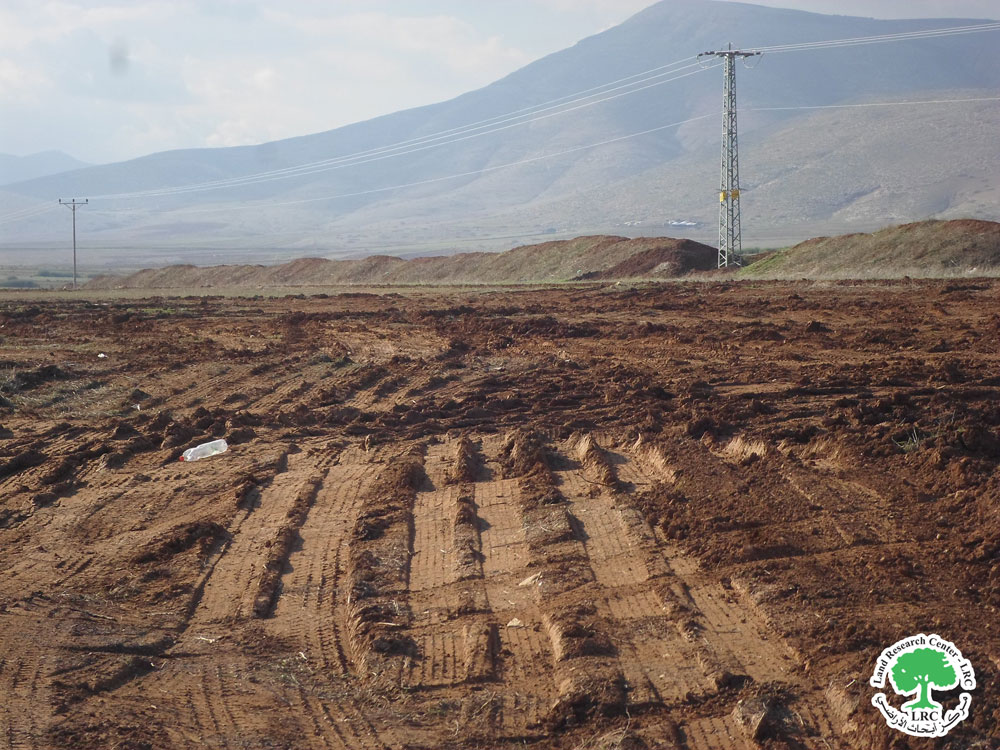
In early April 2026, Israeli Occupation Forces carried out large-scale land leveling operations in the Al-Baqi‘a Plain area as part of a plan to construct a new colonial road linking the Ein Shibli area with the Northern Jordan Valley. The project was based on military orders issued in December 2025 and aims at consolidating full control over the Jordan Valley areas and altering the demographic character of the region in line with policies aimed at the Judaization of the Palestinian Jordan Valley.
During the bulldozing operations, the Israeli Occupation Forces, through a number of machinery units operating under their supervision, destroyed and damaged the following:
- Destruction of a 2-inch water transmission pipeline extending 1,300 meters, through damaging several sections of it. The pipeline was used to transport water from artesian wells in Al-Baqi‘a Plain to several agricultural sites and residential communities. It supplied at least 17 Bedouin families in the Ras al-Ahmar area, consisting of 102 individuals, including 23 children and 49 females, who mainly depend on sheep breeding. The destruction deprived them of their primary water source used for livestock watering and household needs.
- Damage to a water pipeline supplying irrigation water for approximately 160 dunums planted with thyme, belonging to Al-Baqi‘a Agricultural Development Company, which supports 43 individuals, including 9 children and 19 females.
- Damage to another irrigation pipeline serving approximately 70 dunums cultivated with vegetables, belonging to the following farmers:
- Nazeer Mohammad Ali Bisharat, supporting a family of 6 members, including 1 child and 3 females.
- Mohammad Abdul Karim Ahmad Bisharat, supporting a family of 3 members, including 2 females.
- Destruction of another water pipeline transporting water from artesian wells in the “Al-Mi‘yar” area toward the “Al-Tha‘la” area, extending 200 meters with a diameter of half an inch. This resulted in depriving at least 25 farmers, comprising 270 individuals including 143 females, from access to water directly relied upon for irrigating their crops and sustaining agricultural production. These farmers collectively cultivate around 60 dunums of vegetables and protected agricultural crops.
Testimony of Mr. Asid Muwaffaq Daraghmeh Executive Director of Al-Baqi‘a Agricultural Development Company
Mr. Asid Muwaffaq Daraghmeh stated to the Center’s researcher:
“The Al-Baqi‘a Plain area is considered one of the most important agricultural regions in the Northern Jordan Valley and carries a deep-rooted historical and agricultural heritage. For decades, it has served as a major food basket and a primary source of livelihood for hundreds of Palestinian families whose connection to the land and agriculture has been inherited across generations.”
Daraghmeh explained that:
“Al-Baqi‘a Agricultural Development Company is regarded as one of the leading agricultural institutions in Palestine. It owns nearly 4,000 dunums cultivated with diverse crops, including vegetables, grapes, bananas, and field crops. The company provides direct and indirect employment opportunities for dozens of farmers and laborers, while also contributing to the local market and strengthening Palestinian food security.”
He pointed out that the area has been subjected for years to repeated violations by the Israeli occupation, including land leveling, land confiscation, and targeting of agricultural infrastructure, particularly water resources, negatively affecting the stability of the agricultural sector in Al-Baqi‘a Plain.
He added:
“We face major challenges in securing irrigation water due to the repeated targeting of water pipelines and restrictions imposed on access to wells and water resources. This threatens the continuity of agricultural work and exposes vast areas of land to declining productivity or complete crop loss.”
Daraghmeh stressed :
that targeting Al-Baqi‘a Company and its agricultural surroundings extends beyond economic damage, constituting a direct threat to one of Palestine’s leading agricultural models, which represents a key pillar in supporting farmers’ resilience and preserving the land.
He concluded by emphasizing that the continuation of these violations would weaken the agricultural sector in the Northern Jordan Valley and undermine opportunities for sustainable agricultural development in one of the most fertile regions in Palestine.
Long-term Impact on Agriculture
The long-term impact of such violations cannot be overlooked, as the continued targeting of water resources leads to changes in agricultural patterns and forces farmers to abandon crops requiring regular irrigation. This reduces agricultural diversity and negatively affects local food security.
Accordingly, the destruction of water pipelines in Al-Baqi‘a Plain is not merely an attack on infrastructure, but rather a direct assault on the agricultural environment and a major factor accelerating land degradation and undermining the foundations of normal life, thereby threatening the sustainability of the ecosystem in one of the most fertile areas of the Palestinian Jordan Valley.
Background Context
Since the year 2000, farmers in Al-Baqi‘a Plain have suffered from ongoing harassment by the Israeli occupation authorities. The occupation established a trench extending 2 kilometers in length, 3 meters in width, and 4 meters in depth with the aim of seizing vast areas of Al-Baqi‘a lands and obstructing farmers’ movement to and from the plain.
As a result, at least 40,000 dunums out of the total 98,800 dunums of Al-Baqi‘a lands became isolated on the western side of the trench. This plan had severe negative consequences on the movement and livelihoods of farmers, as the trenches became a tool used to undermine the agricultural sector and justify further harassment by occupation forces against farmers in an attempt to deter them from practicing agriculture.
Al-Baqi‘a Plain is also subjected to recurring raids by Israeli Occupation Forces, including the confiscation of agricultural equipment and water pipes, which has had devastating consequences on the agricultural sector.
The area constitutes a major source of livelihood for no fewer than 2,000 farmers who depend on agriculture and livestock breeding, making the targeting of water resources a direct threat to the continuation of agricultural activity and economic life in the region.
Environmental Impact of Destroying Water Networks
Al-Baqi‘a Plain represents one of the most significant agricultural ecosystems in the Northern Jordan Valley, relying heavily on water transmission networks and artesian wells to sustain agricultural activity and preserve ecological balance. Therefore, targeting and destroying water pipelines in the area extends far beyond service disruption or agricultural damage, causing profound disturbances to the natural environment.
The interruption of water supplies to agricultural lands directly leads to soil drying and loss of natural moisture, accelerating soil degradation and making lands more vulnerable to erosion and desertification. With the continued absence of irrigation, productive lands gradually turn barren and incapable of supporting vegetation cover, which is essential for maintaining ecological stability.
Furthermore, the destruction of irrigation systems negatively affects biodiversity in the area, as many living organisms — both plant and animal species — depend directly or indirectly on water availability. As vegetation declines, these organisms lose their natural habitats, resulting in population decline and ecological imbalance.
Water scarcity also severely impacts livestock, especially among Bedouin communities dependent on sheep breeding, as the lack of drinking water sources leads to declining livestock productivity and increased mortality rates, placing additional pressure on already limited natural resources.
Violations of International Law
The destruction of civilian infrastructure, particularly water resources, constitutes a clear violation of international humanitarian law, including:
- The Hague Convention (1907):
- Article 46: Prohibits interference with private property.
- The Fourth Geneva Convention (1949):
- Article 53: Prohibits the destruction of private property except where rendered absolutely necessary by military operations.
- Article 147: Considers extensive destruction of property a grave breach of the Convention.
مشروع: حماية الحقوق البيئية الفلسطينية في مناطق "ج" SPERAC IV - GFFO
Disclaimer: The views and opinions expressed in this report are those of Land Research Center and do not necessarily reflect the views or positions of the project donor; the Norwegian Refugee Council.
إخلاء المسؤولية: الآراء ووجهات النظر الواردة في هذا التقرير هي آراء ووجهات نظر مركز أبحاث الأراضي ولا تعكس بالضرورة وجهات نظر أو مواقف الجهة المانحة للمشروع؛ المجلس النرويجي. للاجئين
