2026-04-30
Israeli colonies Escalate Attacks Against Farmers and Their Lands in “Khillet al-Hummus” South of Yatta, Hebron Governorate
Violation: Attacks on agricultural lands
Date: April 2026
Location: Khillet al-Hummus – Yatta Town / Hebron Governorate
Perpetrators: Israeli settlers
victims: Farmers from the area
Details :
Israeli colonies continue to carry out attacks against farmers and their agricultural lands in the Khillet al-Hummus area, southwest of Yatta town in southern Hebron Governorate. The attacks include preventing farmers from accessing their agricultural fields, destroying their crops, and threatening landowners if they attempt to harvest crops or graze their livestock.
Attack on Farmer Mousa Abu Malsh
Farmer Mousa Khalil Abu Malsh was subjected to a series of attacks targeting an 8-dunum plot of land planted with local wheat, which he cultivated to support his family and feed his flock of approximately 40 sheep.
Abu Malsh stated that Israeli colonies had been pursuing him and obstructing his access to the land since he first plowed it. Despite this, he managed—with assistance from relatives—to cultivate the land under extremely difficult circumstances. As harvest season approached, Israeli colonies stormed the area, released their sheep and horses into the fields, and trampled the crops using vehicles and all-terrain quad bikes.
In an interview with the center’s field researcher, Abu Malsh stated:
“At the beginning of April 2026, I went with my sheep to graze parts of the crop, but the Israeli colonies attacked me, expelled me from the area, and threatened to confiscate my sheep if I returned again. One of the Israeli colonies was armed, so I was forced to leave out of fear that my livestock would be stolen or harmed, as has happened to many farmers in the area.”
Abu Malsh added that the remaining crops left after the settlers’ livestock destroyed much of the field are now difficult for him to access and harvest. He fears that Israeli colonies will once again release their livestock into the land, depriving his flock entirely of this essential crop.
He further noted that the soaring prices of animal feed make finding alternatives nearly impossible, emphasizing that he may ultimately be forced to sell part of his flock in order to feed the remaining animals.
Attack on Farmer Imad Daweesat
Farmer Imad Ibrahim Daweesat owns approximately 12 dunums in the same area, supported by official financial ownership documents. He also owns a flock of sheep.
Daweesat reported that Israeli colonies pursued and chased him with agricultural quad bikes when he attempted to reach the site and even tried to run over his sheep, forcing him to flee with his flock for fear of physical assault.
In his testimony to the center’s researcher, Daweesat stated:
“On 13 April 2026, I went to cut the crops before they had fully dried, trying to save what could still be saved before Israeli colonies grazed on or stole them. Earlier in April, Israeli colonies had already stolen part of the crop, as one of them was cutting and transporting it to his outpost using a quad bike. On the first day, I managed to cut some of the crops and transport them home in my pickup truck. The following day, I returned with several workers and a large truck, trying to harvest as much land as possible in the shortest time out of fear of settler attacks. However, the Israeli colonies assaulted us and arrived at the site accompanied by the Israeli army.”
He continued:
“I contacted the police and informed them that Israeli colonies were preventing me from harvesting my land. When we attempted to leave the area, Israeli colonies blocked the truck’s path and obstructed its movement until the police arrived. The police then ordered me to follow them to an Israeli military camp near Susiya village, where they forced me to unload the harvested crops from the truck. They then told me: ‘Take your truck before we detain both you and it.’”
Daweesat explained that the total amount he managed to harvest did not exceed the equivalent of 1.5 dunums, despite this season’s abundant yield. Most of the land remains unharvested, while Israeli colonies continue to monitor and occupy the area. He fears they will either harvest the remaining crops themselves or release livestock into the fields, all at the expense of his own flock.
Attacks on the Lands of the Obeid Family
Farmer Ayoub Mohammad Abdullah Obeid and his brothers own approximately 90 dunums of land, including 55 dunums planted with fruit trees and 35 dunums cultivated with seasonal field crops such as wheat and barley. The family relies primarily on agriculture and livestock grazing for their livelihood.
Ayoub and his brothers are among the farmers most frequently targeted by settler attacks in the area.
In his testimony to the center’s researcher, Ayoub reported that Israeli colonies attacked approximately 400 olive trees aged between three and four years by allowing livestock to graze on them, breaking branches, damaging them by hand and foot, and crushing them with vehicles.
He further stated that Israeli colonies cut down and destroyed around 250 grapevines approximately three years old. They also destroyed nearly 400 meters of barbed wire fencing surrounding parts of their land and stole roughly 400 metal support posts used for the fencing.
Ayoub added that Israeli colonies vandalized and punctured six plastic water tanks, each with a capacity of 2 cubic meters. They also buried a water well that was under construction and destroyed and stole approximately 400 meters of irrigation network pipes supplying water to the trees.
He further explained that Israeli colonies vandalized his agricultural room, shattered its windows, destroyed a 1-cubic-meter rooftop water tank, and threw kitchen tools and supplies outside after smashing and damaging them.
Ayoub noted that he continues trying to access his land to remove weeds and care for the remaining olive and grape trees, but Israeli colonies attack him every time he attempts to enter the area, forcing him, his sons, his brothers, and their children to leave for fear of physical violence.
Background Information
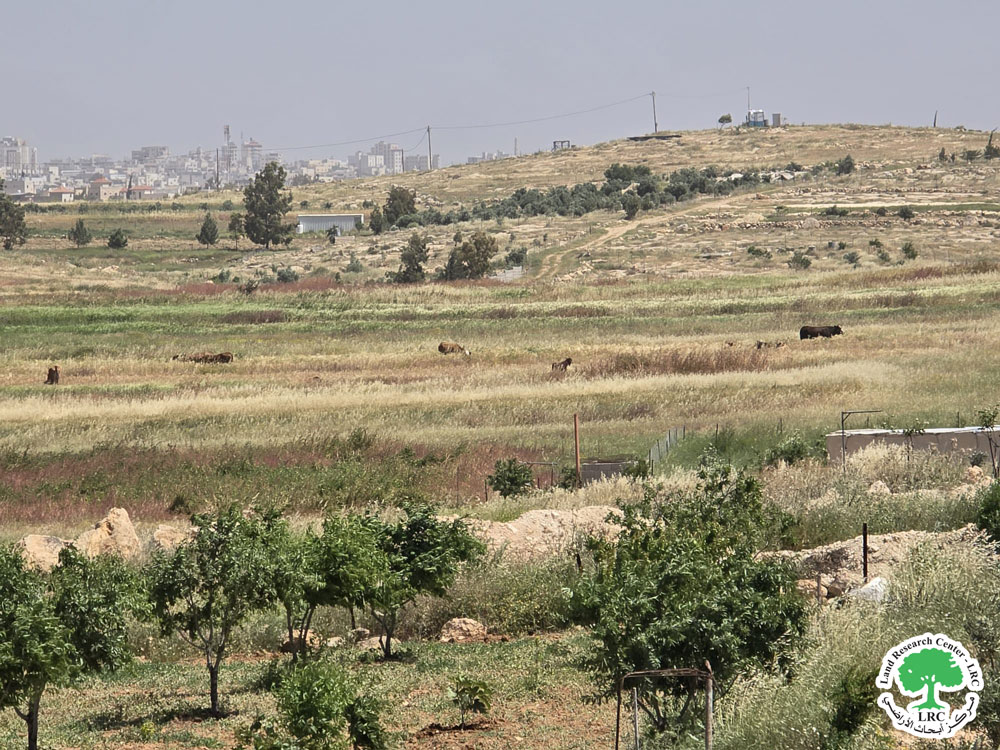
It is worth noting that Israeli colonies established a pastoral settlement outpost in the Arab archaeological site of Khirbet Susiya, where they raise cattle, sheep, and goats and graze them on Palestinian agricultural lands in Wadi al-Hummus and neighboring areas, including Wadi al-Rakheem, Ashkar, Khirbet Susiya, and surrounding communities.
For further information regarding settler attacks against farmers and their lands in Khillet al-Hummus, refer to the following reports issued by the center:
- As Part of Systematic Overgrazing Policies… Israeli colonies Release Livestock onto Obeid Family Lands in Khillet al-Hummus South of Yatta / Hebron Governorate
- Environmental Catastrophe in Khillet al-Hummus… Israeli colonies Devastate Nature and Uproot Hundreds of Trees Belonging to the Obeid Family – Yatta / Hebron Governorate
- Israeli colonies Attack Farmers’ Lands and Property in Khillet al-Hummus South of Yatta / Hebron Governorate
- مشروع: حماية الحقوق البيئية الفلسطينية في مناطق "ج" SPERAC IV - GFFO
Disclaimer: The views and opinions expressed in this report are those of Land Research Center and do not necessarily reflect the views or positions of the project donor; the Norwegian Refugee Council.
إخلاء المسؤولية: الآراء ووجهات النظر الواردة في هذا التقرير هي آراء ووجهات نظر مركز أبحاث الأراضي ولا تعكس بالضرورة وجهات نظر أو مواقف الجهة المانحة للمشروع؛ المجلس النرويجي. للاجئين
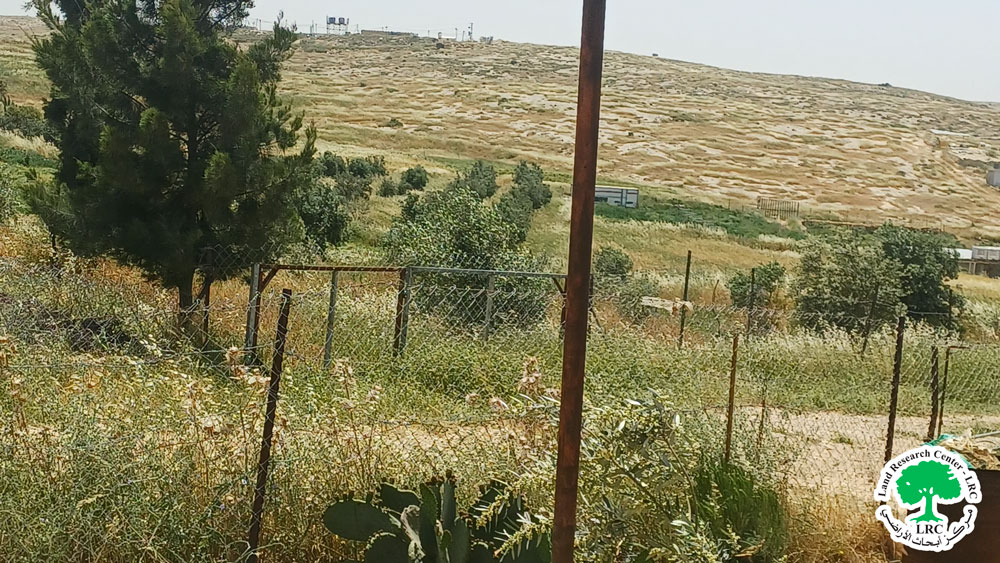
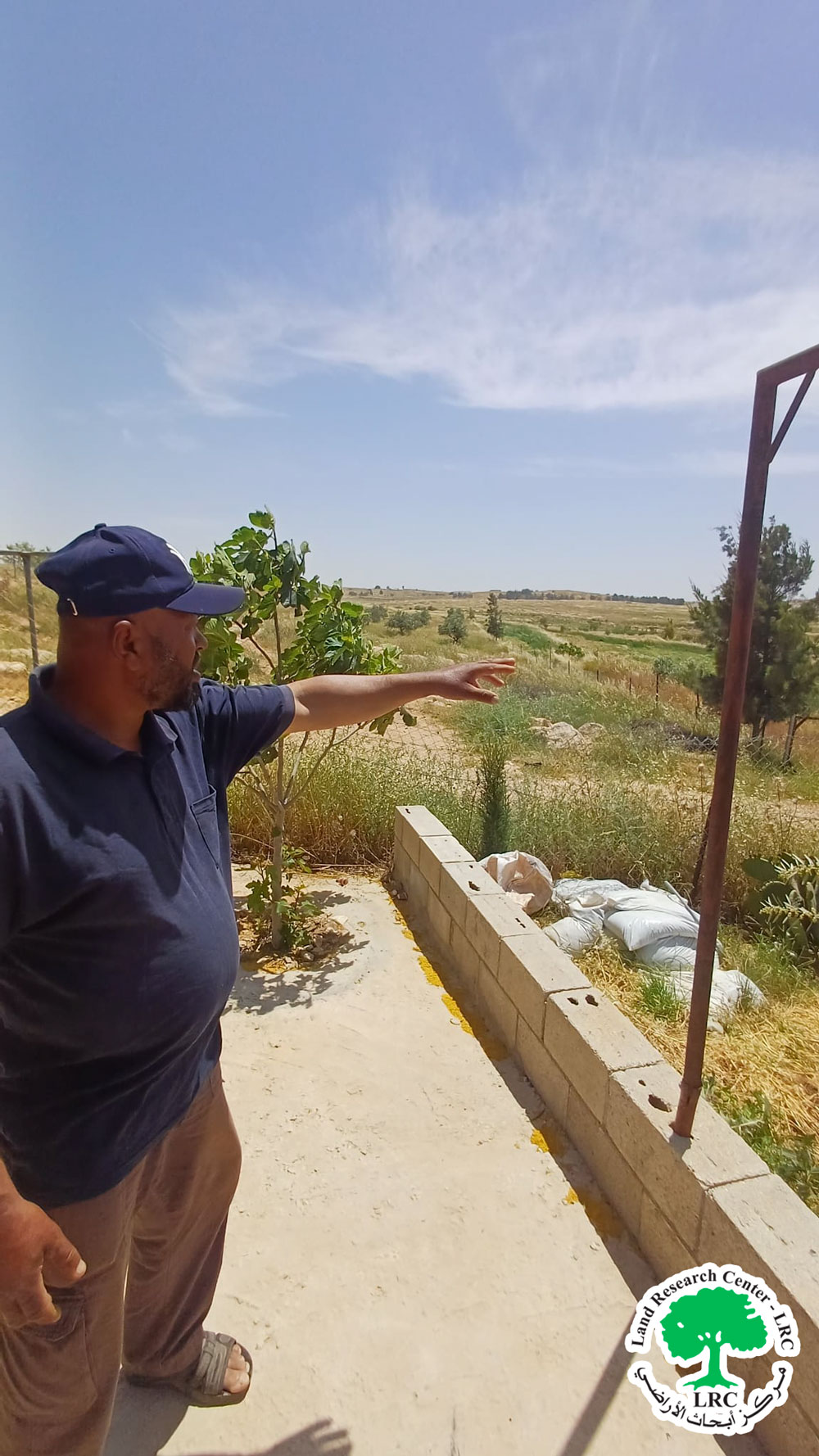
Photos Scenes from the lands of farmer Ayoub Obeid, showing settlers’ cattle grazing within the area