2025-05-04
Settlers Cutting Down 60 Old Olive Trees in Yetma Village/ Nablus Governorate
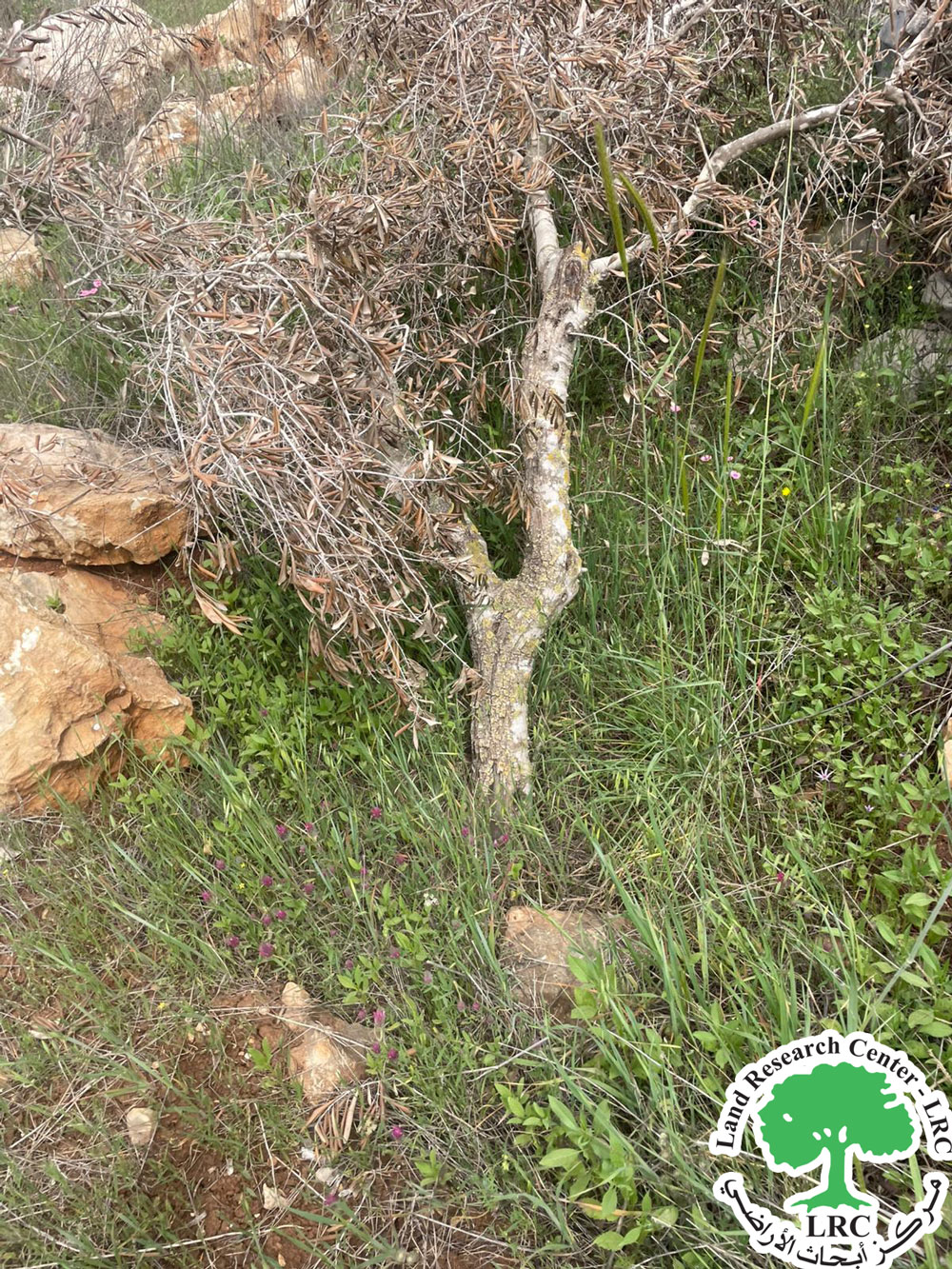
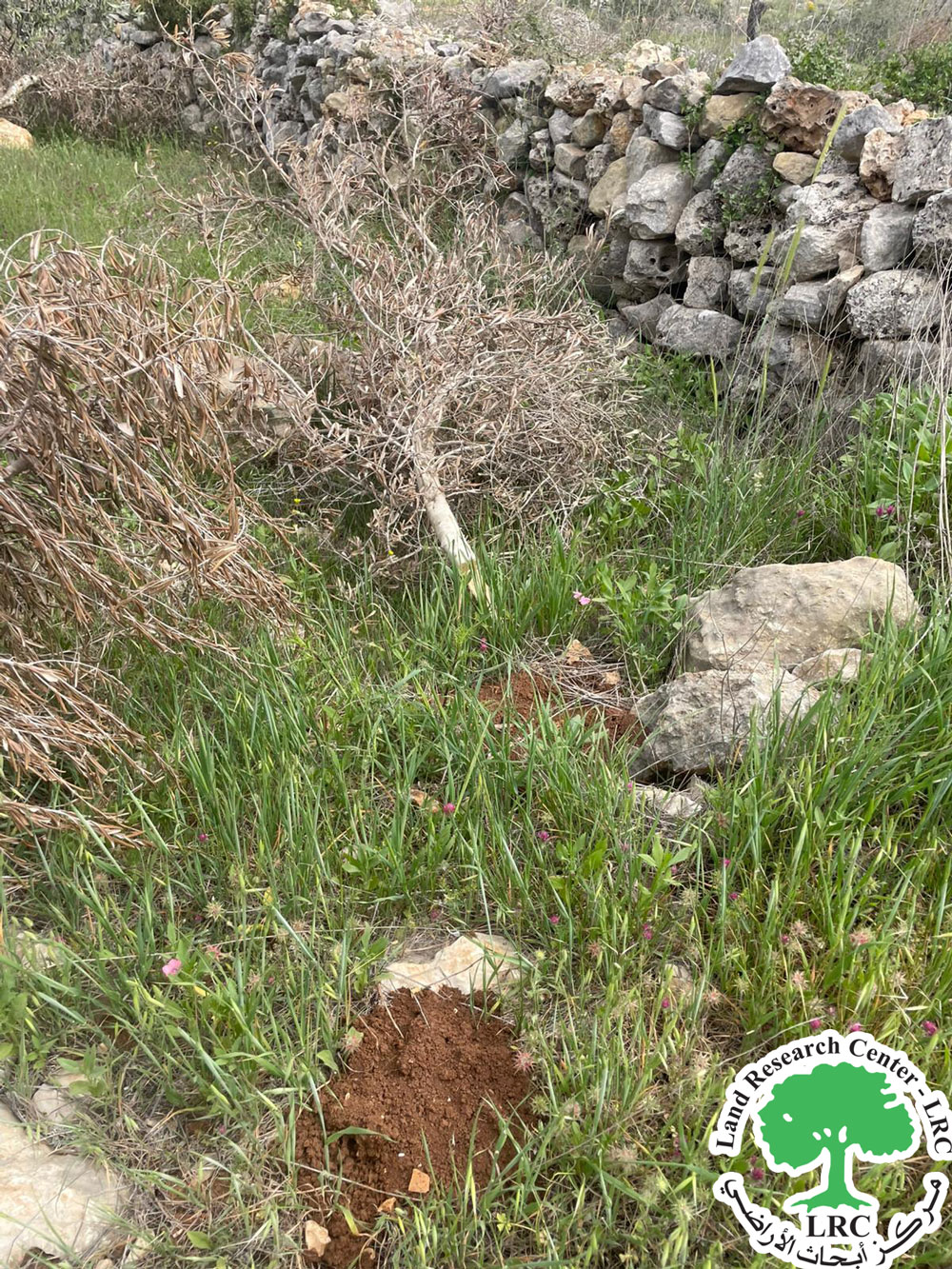
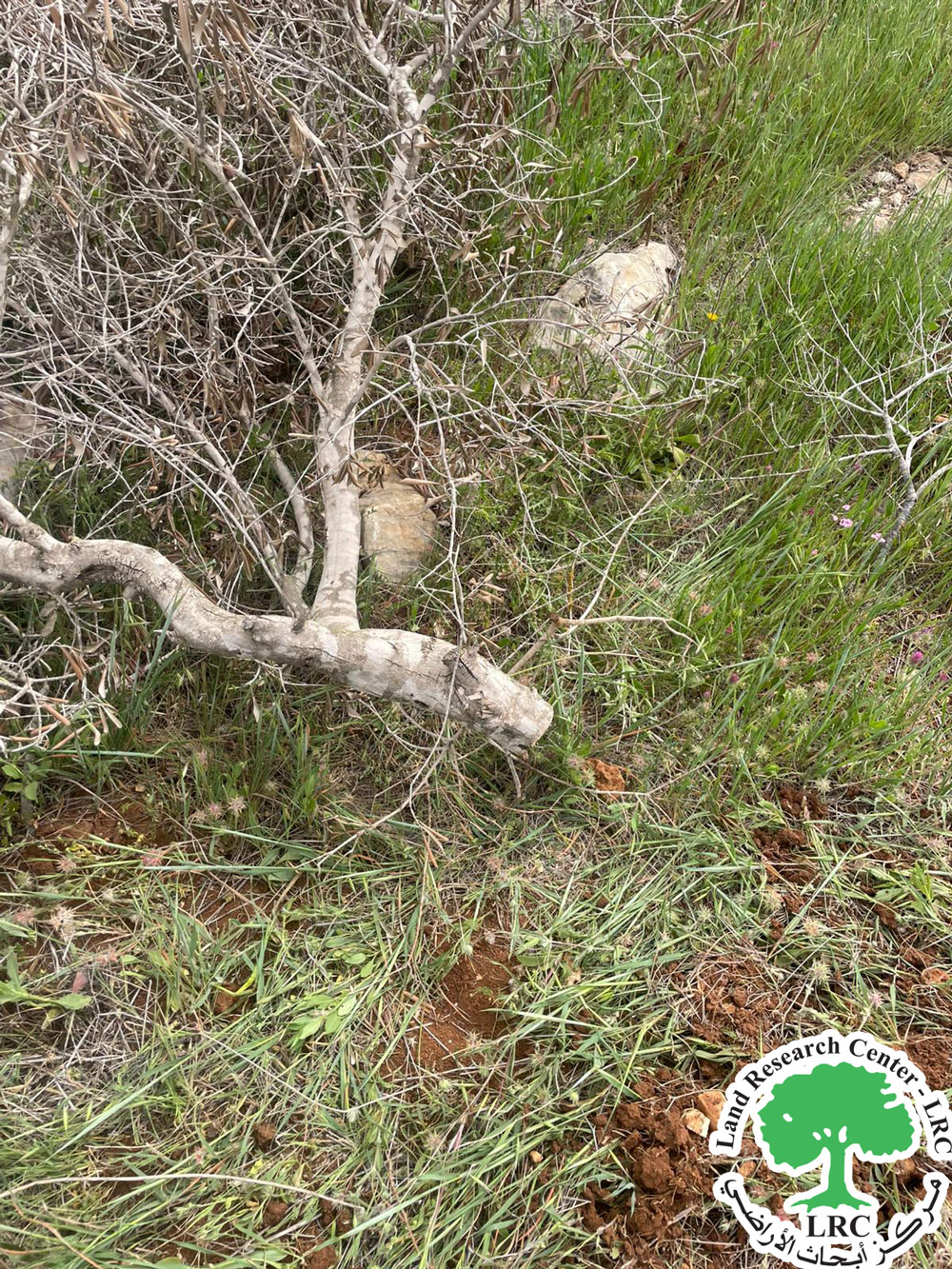
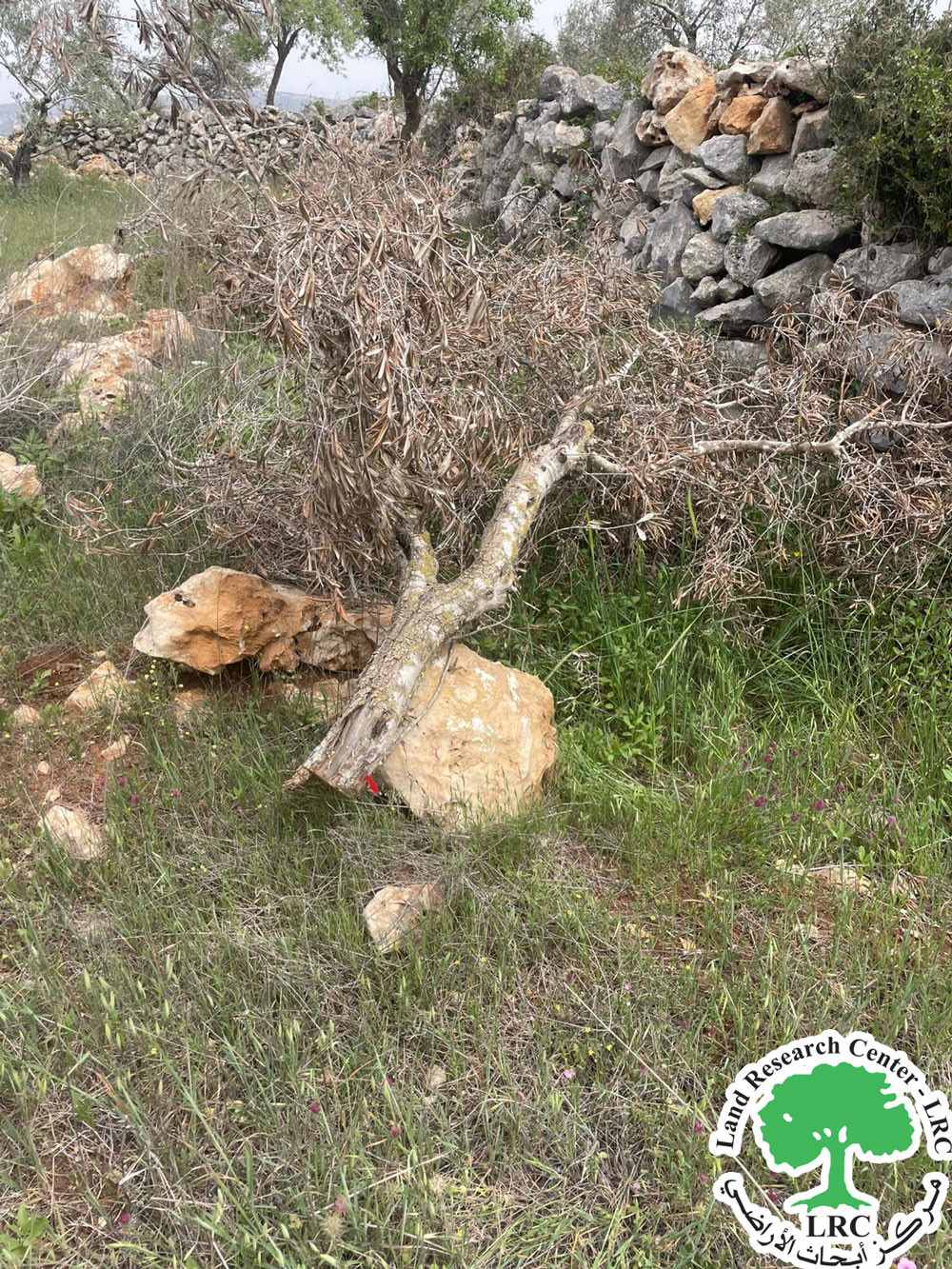
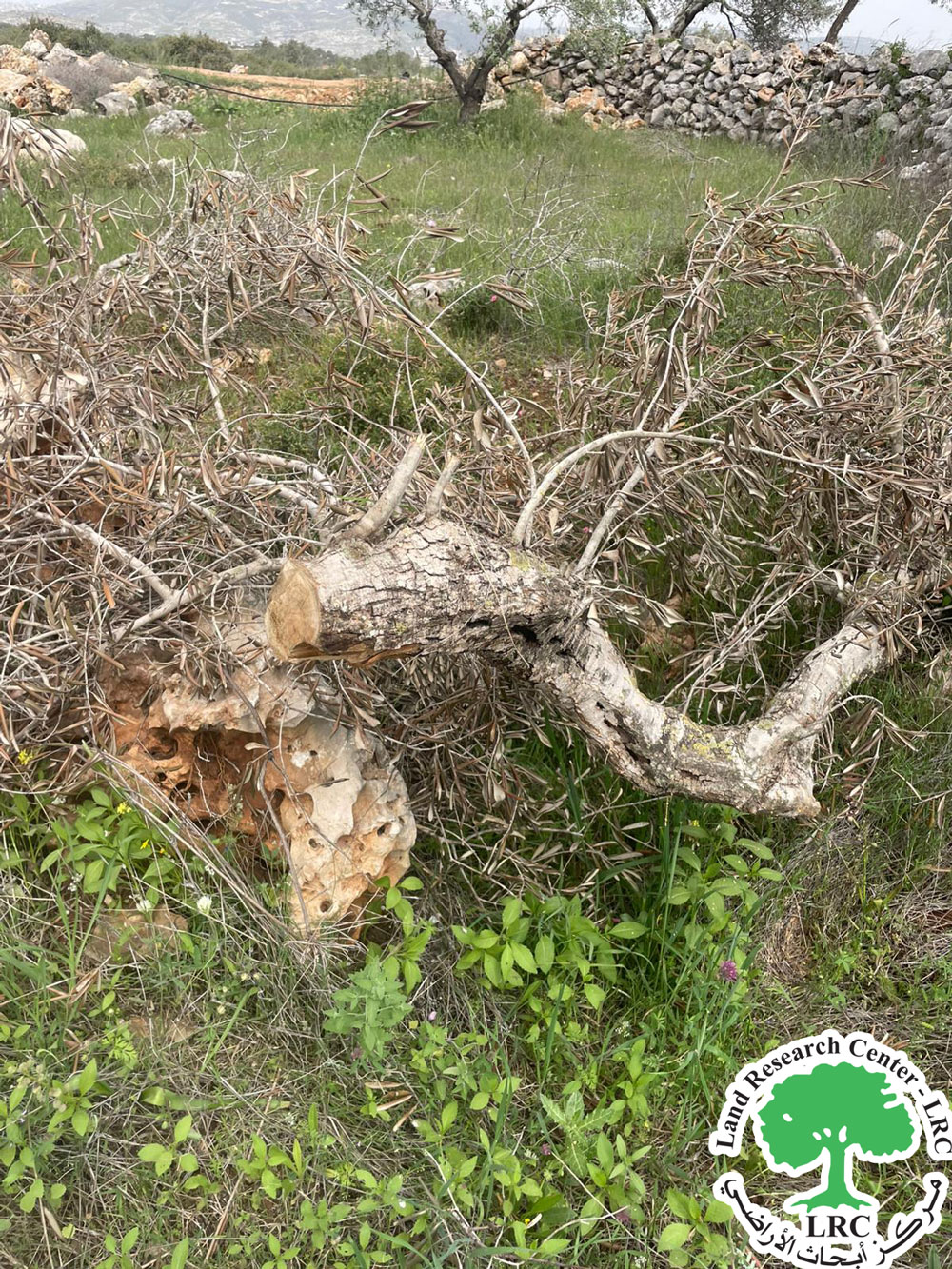
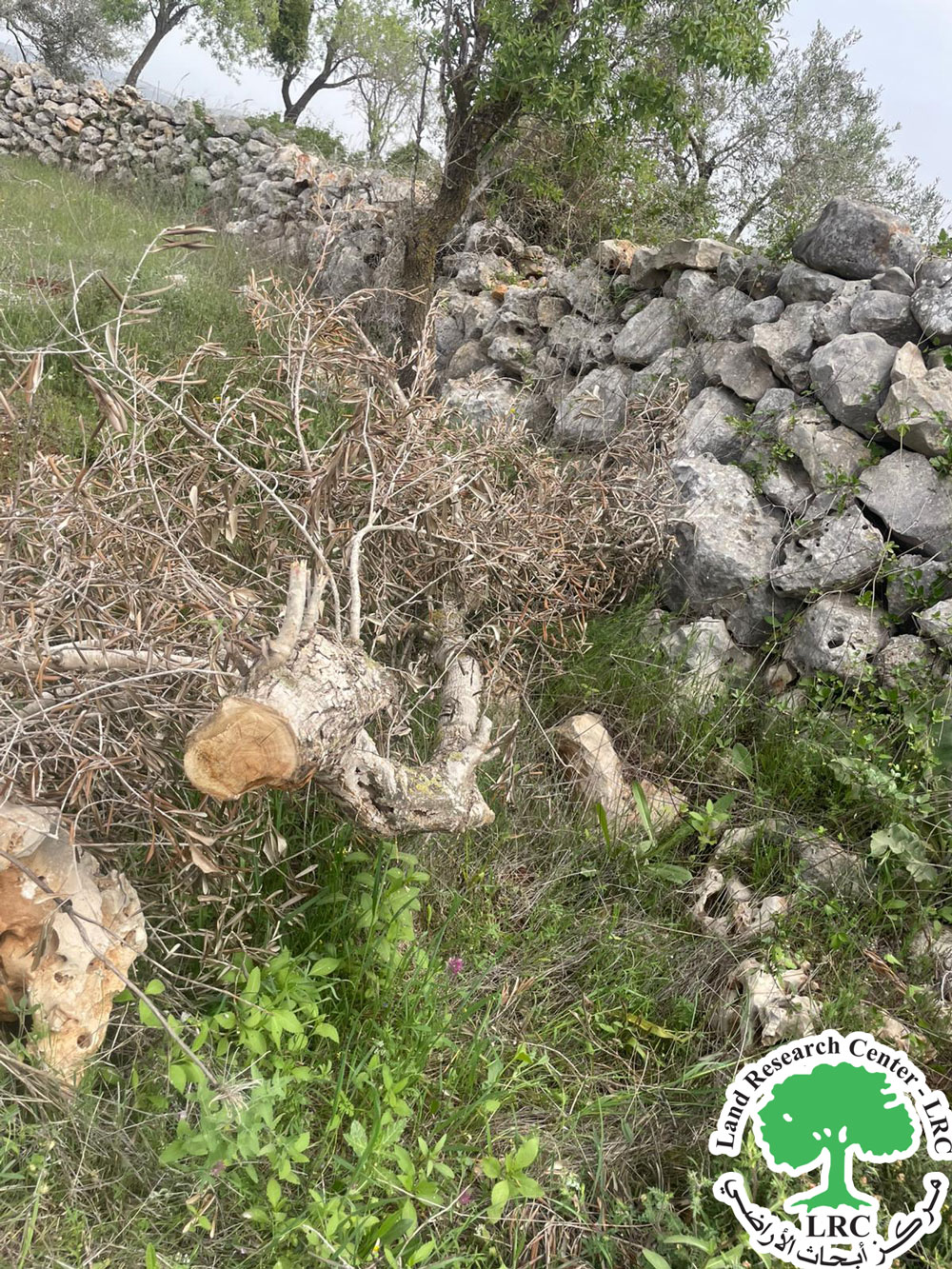
Violation: Cutting and sabotaging 60 olive trees.
Location: Yetma village, south Nablus.
Date: May, 4th 2025.
Perpetrators: Settlers.
Affected party: Farmer Ahmad Metleq Ahmad Najar.
Details:
‘Jabal Sbeih’ area which is a natural extension of Yetma village and Beta town lands and is one of important sites targeted by settlers and carried out several assaults on lands and agricultural trees, many lives of several farmers were transferred to an entire nightmare.
A group of settlers from settlement located on Al Jabal since 2021 targeted an agricultural land within natural block No.(4) from Yetma village lands, with an area of 11 dunams belongs to farmer Ahmad Mutleq Ahmad Najar , a resident of Yetma village.
Settlers cut down and sabotaged 60 old olive trees aging 65 years using electricity sharp tools, resulting completely damaged.
Farmer Ahmad Najar told as follows:
‘’I own an area of 11 dunams, I rehabilitated it and build retaining walls around it which cost me a significant amount of money, about 130 olive trees planted in the land. Since the establishment of ‘Avitar’ settlement in 2021, settlers have escalated their assaults against us. Personally, I was subjected by settlers’ attack, windows of my car were smashed, I was several beaten, resulting in bone fractures, which demanding to go to hospital. After the declaration the War on Gaza, I prevented to accessing my land by the Israeli occupation and settlers. In last harvesting season of olive (2024), they allowed us as partially to accessing the land to harvest the olive, but we were shocked when we noted that 70 olive trees were completely burned, as the settlers took advantage of our absence and setting fire to olive fields.’’
The affected farmer added:
‘’ I reported Palestinian Civil Liaison Office, just a few days ago, we were allowed to us to entering and checking up the land, and we saw settlers had completely cut 60 olive trees. As all the trees in the land were burned or cut down, noted that the land produces no less than 20 tins of olive oil in each season.’’
Targeting of olive trees by settlers was repeated several times, as olive tree is symbol of resilience and the existence of Palestinian in the West Bank, it was and until now main target to settlers’ assaults, these attacks aim to ruin the land and displace it from its residents. In recent years, the Palestinian countryside has witnessed hundreds of assaults on olive trees, including cutting and deliberate arson, as part of a systematic policy to erode and uproot Palestinian existence.
About Yetma Village:
14 Km south Nablus city , Yatma is surrounded by Bita (North), As-Sawiya and Yasuf (west), Qablan (east) and As-Sawiya village (south). Yatma has a total population of 2853 people according to 2007 censusÙˆ with a total area of 2952 dunums , of which 392 dunums are a built up area for the village.
Bypass roads devoured 164 dunums , as segments of bypasses 60 and 505 pass-through the village . Oslo accords divided the village’s lands as the following:
• B area : with a total area of 912 dunums (31%).
• C area: with a total area of 2040 dunums (69%).
Legal Commentary:
The Palestinian environment, in general, is subjected to numerous environmental violations by the Israeli occupation, disregarding all international and national laws and conventions related to the protection of environmental rights. The right to live in a clean and healthy environment is a fundamental human right that has been inherent to mankind since the beginning of creation. The occupation often attempts to present itself as being concerned with international environmental issues, despite having signed major environmental protection agreements, such as the Basel Convention in 1989, the Rotterdam Convention in 2008, the Stockholm Convention in 2001, and the Ramsar Convention in 1971, as well as air quality and climate protocols. Nevertheless, Israel continues to violate all of these treaties without accountability or oversight.
In addition to the provisions regarding the right to enjoy a clean and healthy environment for all those under military occupation according to international laws, conventions, and treaties, such as the International Covenant on Economic, Social, and Cultural Rights, adopted by the United Nations General Assembly in Resolution 2200A (d-21) on December 16, 1966, in Article (1), paragraph (2): "...All peoples, in pursuit of their own objectives, have the right to freely dispose of their natural wealth and resources without prejudice to any obligations arising from the international economic cooperation based on the principle of mutual benefit and international law. In no case shall a people be deprived of its means of subsistence...".
Undoubtedly, the violations carried out by the Israeli occupation contradicts with the laws of the occupation state itself before any other laws. Referring to the details of this case, the Israeli Penal Code of 1977 and its amendments stipulate that trespassing on someone else's property to commit a criminal act punishable by law is an offense. By reading Article 452 of the Israeli Penal Code, we find that the law punishes those who commit an offense or cause damage to property such as (a water well, a water reservoir, a dam, a floodgate, planted trees, a bridge, a tank, or a water cistern) with a penalty of five years imprisonment.
In addition to, Article 447 of the Penal Code states: "Anyone who does any of the following with the intent to intimidate, insult, or harass the property owner or commit a crime shall be punished by imprisonment for two years:
(1) Enters or crosses the property;
(2) After entering the property legally, remains there unlawfully.
(b) A crime is committed under this section if the offender carries a firearm or a cold weapon, and the punishment is imprisonment for four years."
By reading the text of this article, we find that the Israeli Penal Code criminalizes the mere act of entering someone else's property without permission, with the intent to insult, harass, or intimidate, and punishes this act with two years of imprisonment. The punishment increases to four years if the offender commits any act on someone else's property using a weapon or a sharp tool, referred to as a "cold weapon." This is explicitly criminalized in the text of Article 447 of the aforementioned Israeli Penal Code. Additionally, a penalty of 5 years imprisonment is imposed on those who cause damage to property mentioned in Article 452. Therefore, the violator, the "settler," should face a compounded violation: the first for entering a property that is not theirs, and the second for trespassing on and cutting down the planted trees, resulting in environmental harm.
Therefore, the Israeli aggressor blatantly violates both international laws and treaties, as well as the internal laws of the "occupying state," in a clear violation. Consequently, the "Israeli judiciary" must hold the settlers accountable and punish them for these actions based on the provisions of their own laws. However, there is no legal accountability for the aggressors by the Israeli judiciary. Despite this, every human being on this earth has the right to live in a clean, healthy, and safe environment, free from any violation or aggression against it.
مشروع: حماية الحقوق البيئية الفلسطينية في مناطق "ج" SPERAC IV - GFFO
Disclaimer: The views and opinions expressed in this report are those of Land Research Center and do not necessarily reflect the views or positions of the project donor; the Norwegian Refugee Council.
إخلاء المسؤولية: الآراء ووجهات النظر الواردة في هذا التقرير هي آراء ووجهات نظر مركز أبحاث الأراضي ولا تعكس بالضرورة وجهات نظر أو مواقف الجهة المانحة للمشروع؛ المجلس النرويجي. للاجئين