2026-05-03
Israeli colonists Bulldoze Land and Uproot 400 Fruit-Bearing Olive Trees in Qusra Village, Nablus Governorate
Violation Type: Bulldozing and uprooting of 400 fruit-bearing olive trees
Location: Qusra Village / Nablus Governorate
Date of Violation: 03/05/2026
Perpetrators: Israeli colonists
Victims: Eight agricultural families (45 individuals)
Details of the Violation:
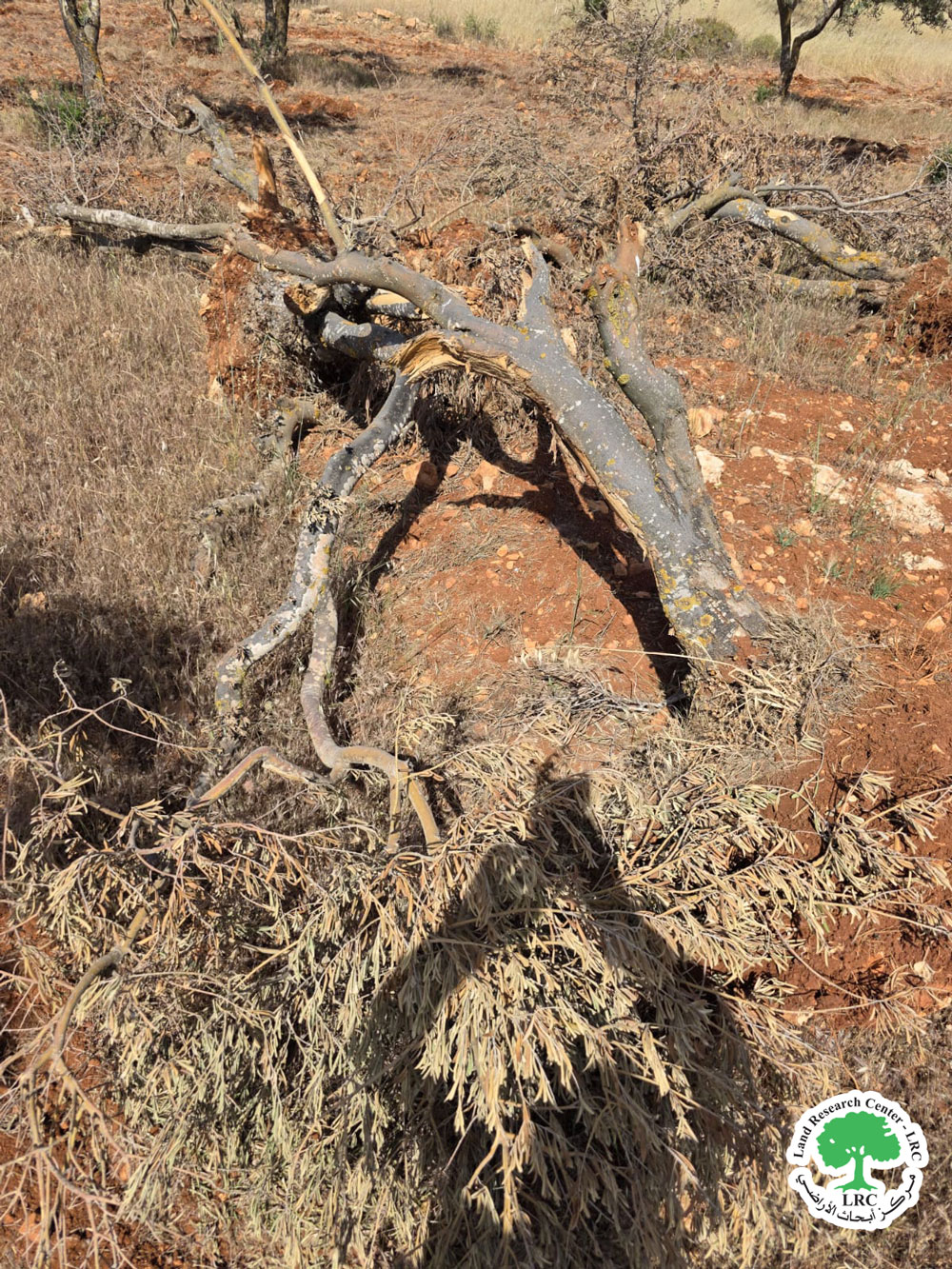
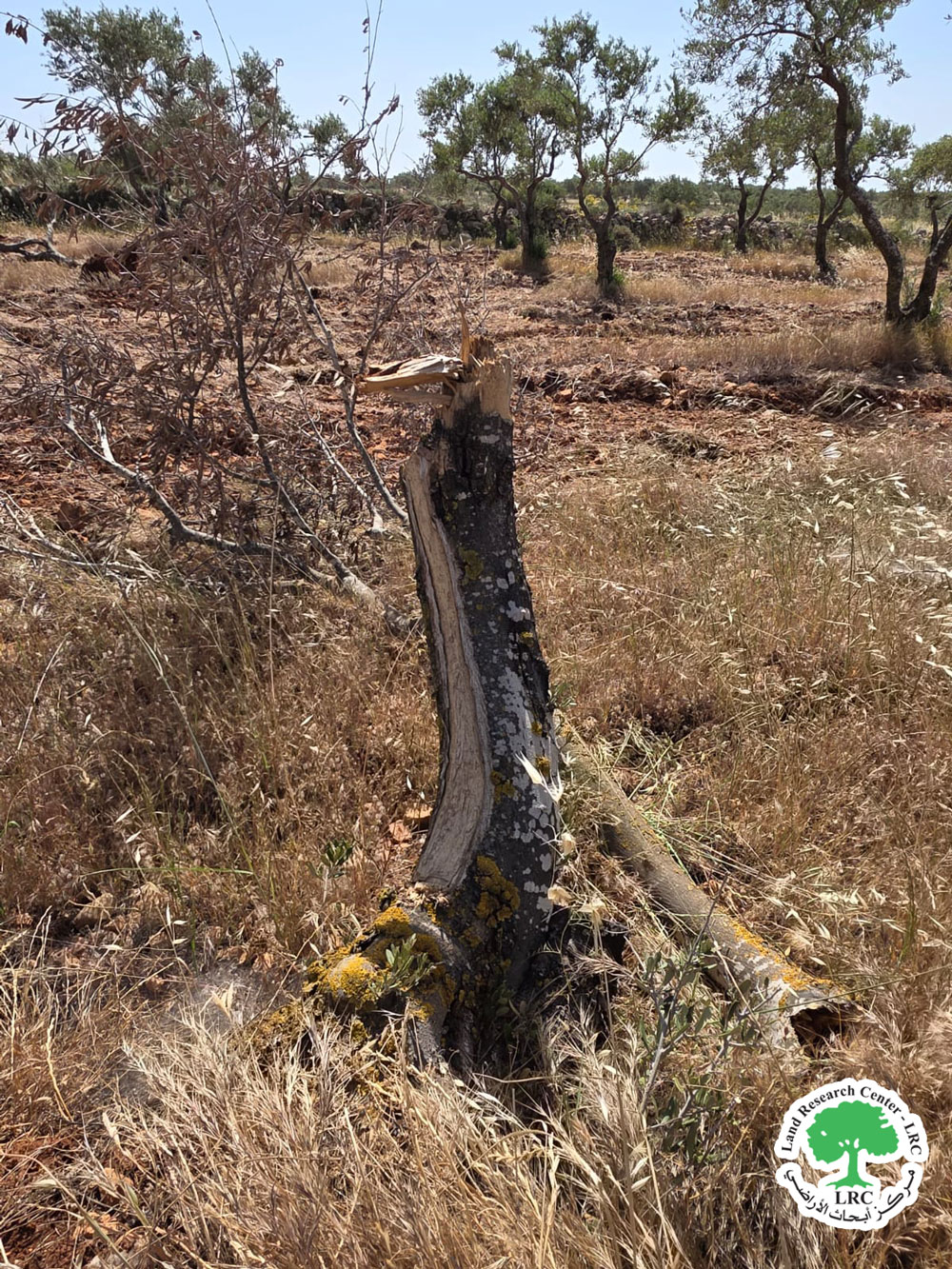
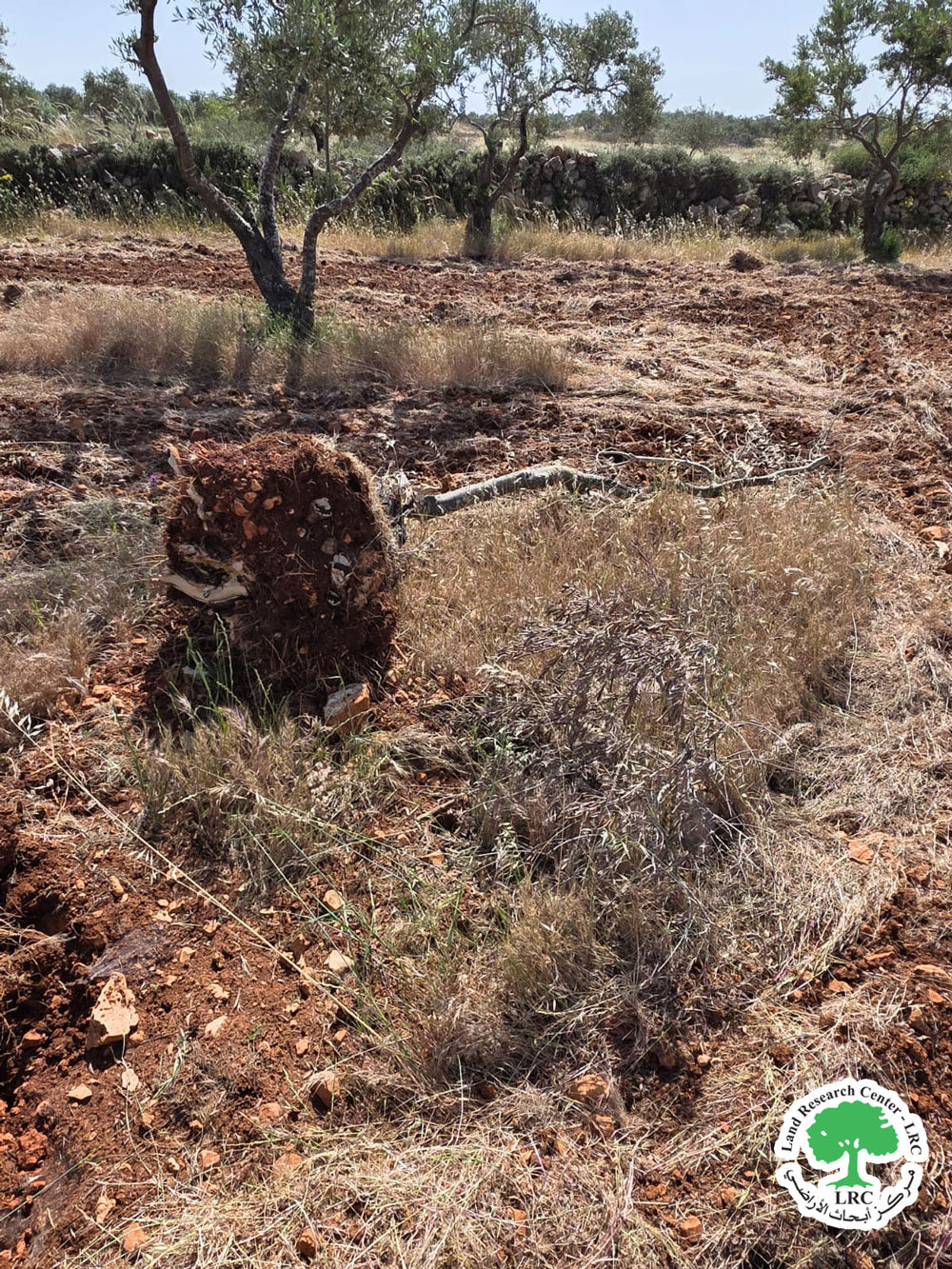
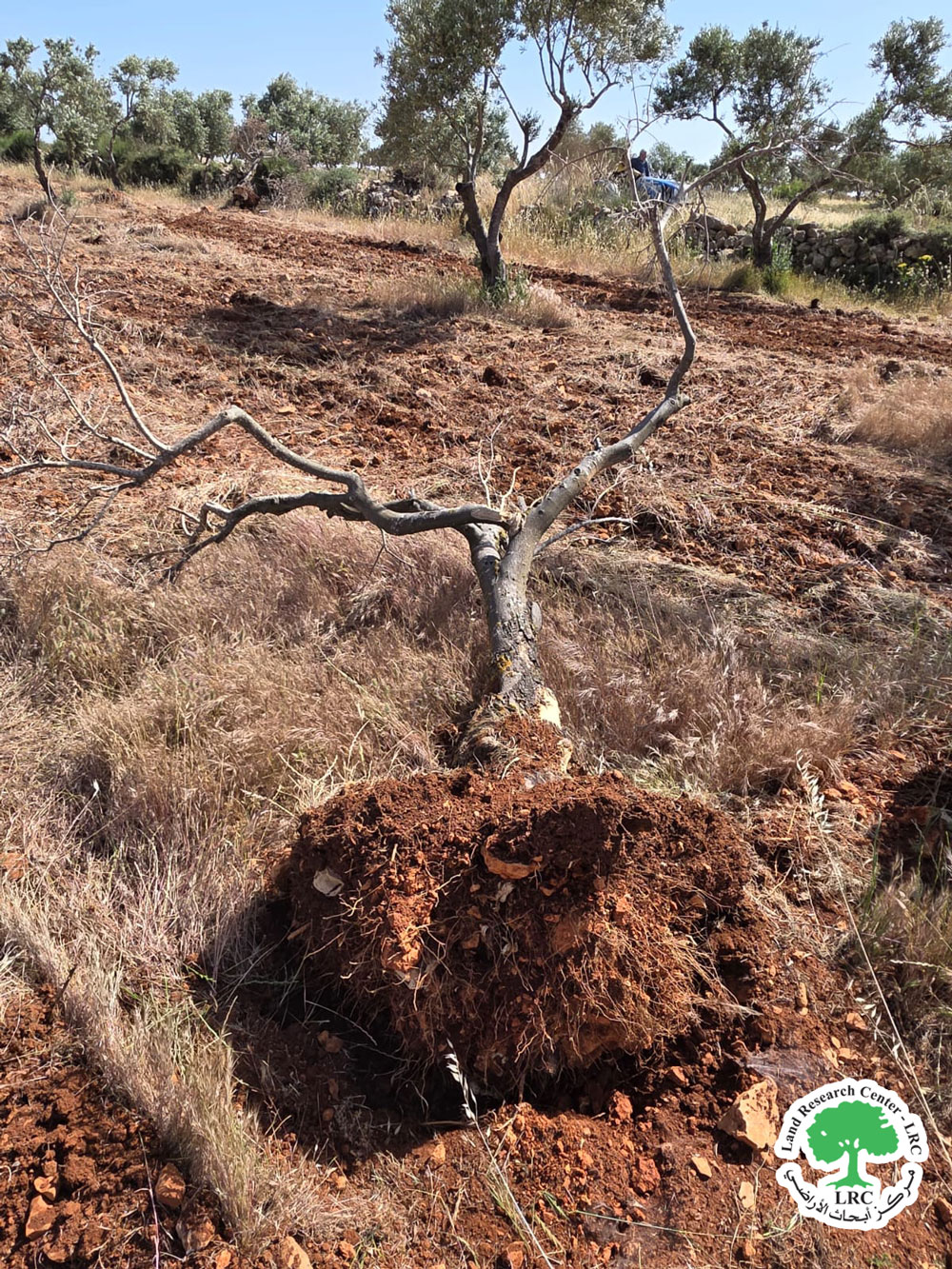
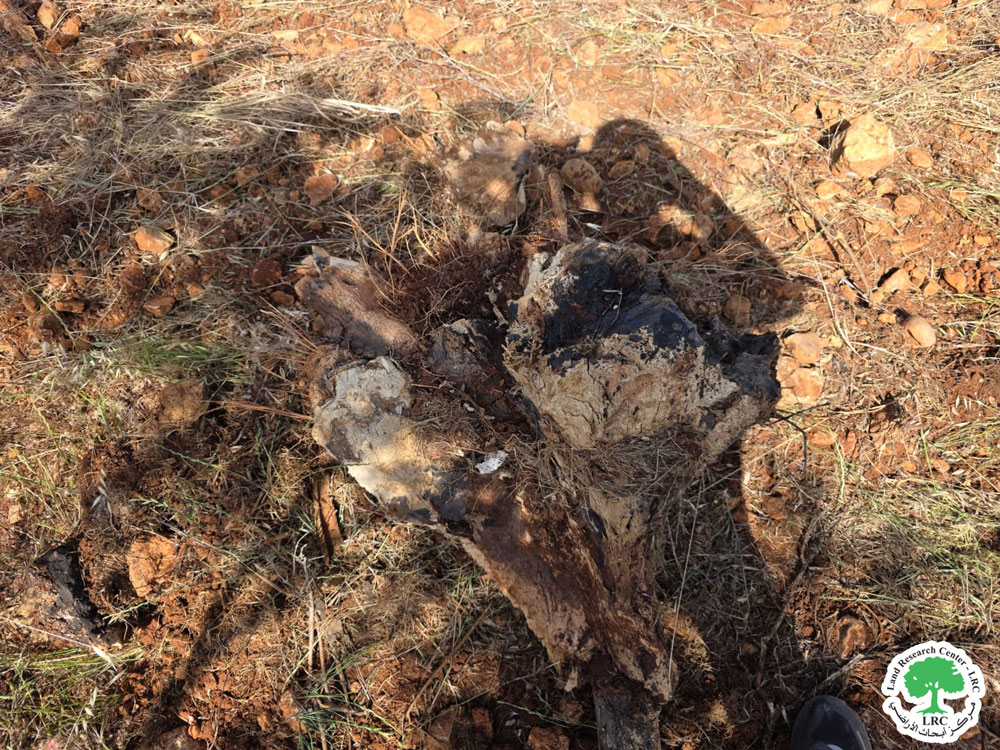
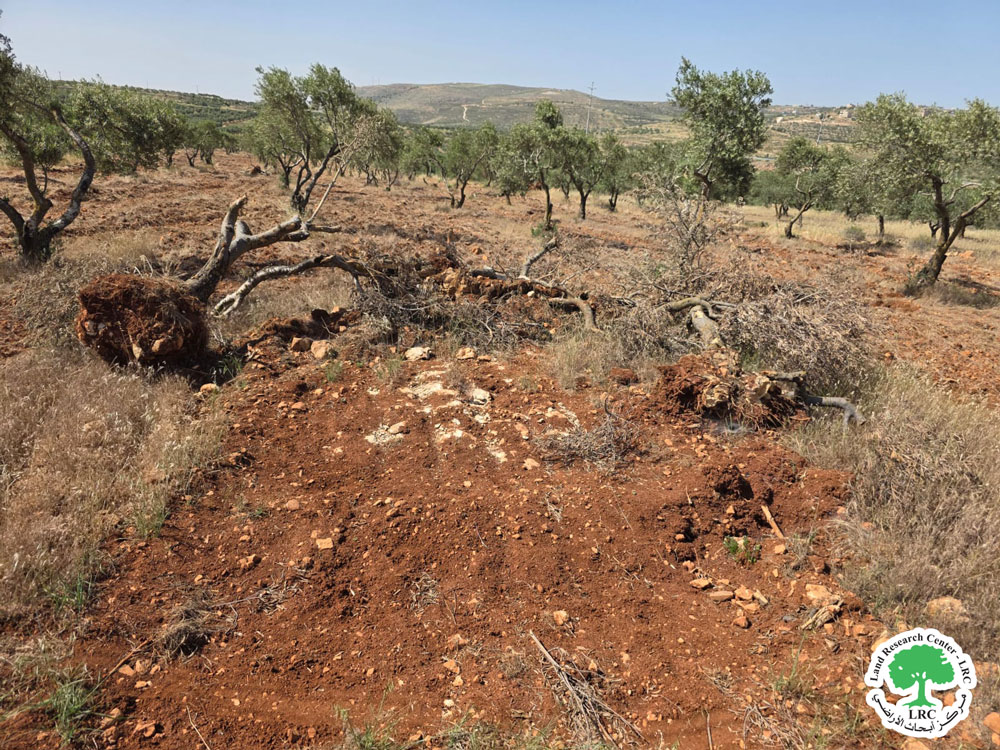
On the morning of Sunday, May 3, 2026, a group of Israeli colonists from outposts established on the lands of Aqraba village carried out a large-scale attack on the agricultural lands of Qusra. The Israeli colonists , operating three bulldozers under heavy protection from the Israeli army, conducted extensive bulldozing over approximately 17 dunums of olive orchards located in the northeastern areas of Qusra village, specifically in the Ras Abu Sa’adeh and Al-Zawaya areas, corresponding to natural basin No. 23, plots 17 and 18.
Field data indicate that the bulldozing included the complete uprooting of olive trees aged between 28 and 35 years, resulting in the destruction of approximately 400 trees and causing severe damage to the vegetation cover in the area.
The outpost in the southeast of Aqraba village, near the road linking Majdal Bani Fadil and Aqraba, serves as a launch point for repeated attacks on local agricultural lands. Previous field research has documented multiple violations originating from this outpost, including the destruction of agricultural property and substantial economic losses for farmers.
The targeted lands in Qusra belong to eight farming families who had cultivated and developed these lands over the past 20 years, including digging wells to enhance agricultural productivity. This long-term cultivation was a protective measure against settler encroachment, ensuring continuous agricultural use. Nevertheless, the lands remained vulnerable to repeated attacks that threaten their agricultural stability and productive continuity.
Testimony of the Affected Farmer:
Farmer Fathallah Mahmoud Mohammed Abu Rida, one of the victims, reported to the Land Research Center:
"I own a plot of approximately 8 dunums in the Al-Zawaya area, near the settlement of Majdoleem. I planted olive saplings in 2000, numbering around 160 trees, now approximately 30 years old. These trees represented a significant economic resource, producing about 60 jars of olive oil annually. For me, the land symbolized livelihood, stability, and an agricultural refuge.
Over the past two years, I could not access it regularly due to escalating settler attacks and the presence of a nearby military point. On the few occasions I accessed the land, I found Israeli colonists operating bulldozers and conducting large-scale bulldozing, uprooting all olive trees, leaving none behind.
This attack caused me significant psychological distress, as the land holds historical and sentimental value, representing my presence in the area. It also inflicted severe economic losses, given that the uprooted trees were a primary source of income."
Summary of Damages by Family (Field Monitoring):
Farmer | Family Members | Females | Children | Affected Trees |
Zuhair Mustafa Abu Rida | 9 | 3 | 4 | 34 |
Adli Rizq Odeh | 5 | 2 | 0 | 29 |
Asid Kamal Odeh | 4 | 2 | 1 | 45 |
Senior Sharif Abdel Aziz | 7 | 4 | 3 | 17 |
Naeem Mahmoud Odeh | 8 | 5 | 3 | 22 |
Fathallah Mahmoud Abu Rida | 3 | 2 | 0 | 160 |
Mohammed Ibrahim Abu Rida | 7 | 4 | 2 | 42 |
Mahmoud Ezzat Al-Wadi | 2 | 1 | 0 | 51 |
Total | 45 | 23 | 13 | 400 |
Field Monitoring and General Assessment:
Field observations by the Land Research Center over recent years indicate that Qusra is one of the most targeted villages by Israeli colonists , particularly in southern Nablus Governorate. The village regularly experiences large-scale attacks, including uprooting olive trees, destruction of agricultural property, and direct assaults on farmers.
The eastern part of the village has been partially isolated due to the establishment of multiple settler outposts and connecting roads, creating a geographic barrier that severely restricts access to farmland.
There are currently three outposts on Qusra’s lands, in addition to the Majdoleem settlement, collectively controlling over 30% of village lands, making access and cultivation increasingly difficult for the local farmers. This control extends to natural resources, including water, negatively affecting agricultural production and threatening the sustainability of farming in the area.
Environmental Impact:
The uprooting of olive trees has severe environmental and agricultural consequences, as olive trees are crucial for soil protection, erosion prevention, and maintaining green cover. Continued destruction reduces biodiversity, undermines the village’s agricultural identity, and diminishes its capacity for sustainable agriculture.
Conclusion:
The bulldozing and uprooting of olive trees represent serious economic, social, and environmental violations, impacting both the livelihoods and psychological well-being of the affected families. These actions threaten the long-term sustainability of agriculture in Qusra and exemplify the broader challenges faced by Palestinian farmers in areas under settlement expansion.
Legal Commentary:
The Palestinian environment, in general, is subjected to numerous environmental violations by the Israeli occupation, disregarding all international and national laws and conventions related to the protection of environmental rights. The right to live in a clean and healthy environment is a fundamental human right that has been inherent to mankind since the beginning of creation. The occupation often attempts to present itself as being concerned with international environmental issues, despite having signed major environmental protection agreements, such as the Basel Convention in 1989, the Rotterdam Convention in 2008, the Stockholm Convention in 2001, and the Ramsar Convention in 1971, as well as air quality and climate protocols. Nevertheless, Israel continues to violate all of these treaties without accountability or oversight.
In addition to the provisions regarding the right to enjoy a clean and healthy environment for all those under military occupation according to international laws, conventions, and treaties, such as the International Covenant on Economic, Social, and Cultural Rights, adopted by the United Nations General Assembly in Resolution 2200A (d-21) on December 16, 1966, in Article (1), paragraph (2): "...All peoples, in pursuit of their own objectives, have the right to freely dispose of their natural wealth and resources without prejudice to any obligations arising from the international economic cooperation based on the principle of mutual benefit and international law. In no case shall a people be deprived of its means of subsistence...".
Undoubtedly, the violations carried out by the Israeli occupation contradicts with the laws of the occupation state itself before any other laws. Referring to the details of this case, the Israeli Penal Code of 1977 and its amendments stipulate that trespassing on someone else's property to commit a criminal act punishable by law is an offense. By reading Article 452 of the Israeli Penal Code, we find that the law punishes those who commit an offense or cause damage to property such as (a water well, a water reservoir, a dam, a floodgate, planted trees, a bridge, a tank, or a water cistern) with a penalty of five years imprisonment.
In addition to, Article 447 of the Penal Code states: "Anyone who does any of the following with the intent to intimidate, insult, or harass the property owner or commit a crime shall be punished by imprisonment for two years:
(1) Enters or crosses the property;
(2) After entering the property legally, remains there unlawfully.
(b) A crime is committed under this section if the offender carries a firearm or a cold weapon, and the punishment is imprisonment for four years."
By reading the text of this article, we find that the Israeli Penal Code criminalizes the mere act of entering someone else's property without permission, with the intent to insult, harass, or intimidate, and punishes this act with two years of imprisonment. The punishment increases to four years if the offender commits any act on someone else's property using a weapon or a sharp tool, referred to as a "cold weapon." This is explicitly criminalized in the text of Article 447 of the aforementioned Israeli Penal Code. Additionally, a penalty of 5 years imprisonment is imposed on those who cause damage to property mentioned in Article 452. Therefore, the violator, the "settler," should face a compounded violation: the first for entering a property that is not theirs, and the second for trespassing on and cutting down the planted trees, resulting in environmental harm.
Therefore, the Israeli aggressor blatantly violates both international laws and treaties, as well as the internal laws of the "occupying state," in a clear violation. Consequently, the "Israeli judiciary" must hold the Israeli colonists accountable and punish them for these actions based on the provisions of their own laws. However, there is no legal accountability for the aggressors by the Israeli judiciary. Despite this, every human being on this earth has the right to live in a clean, healthy, and safe environment, free from any violation or aggression against it.
مشروع: حماية الحقوق البيئية الفلسطينية في مناطق "ج" SPERAC IV - GFFO
Disclaimer: The views and opinions expressed in this report are those of Land Research Center and do not necessarily reflect the views or positions of the project donor; the Norwegian Refugee Council.
إخلاء المسؤولية: الآراء ووجهات النظر الواردة في هذا التقرير هي آراء ووجهات نظر مركز أبحاث الأراضي ولا تعكس بالضرورة وجهات نظر أو مواقف الجهة المانحة للمشروع؛ المجلس النرويجي. للاجئين