2026-04-30
Large-Scale Land Bulldozing to Construct a Colonial Road Targeting Khirbet Al-Suruj on the Lands of Al-‘Araqa Village / Jenin Governorate
- Violation: Initiation of the construction of a new colonial road aimed at imposing control over the area.
- Location: Khirbet Al-Suruj – Al-‘Araqa Village / Jenin Governorate.
- Date: April 2026.
- Perpetrating Party: The so-called Israeli Civil Administration.
- Victim: A large number of agricultural families and landowners in the area.
Details of the Violation:
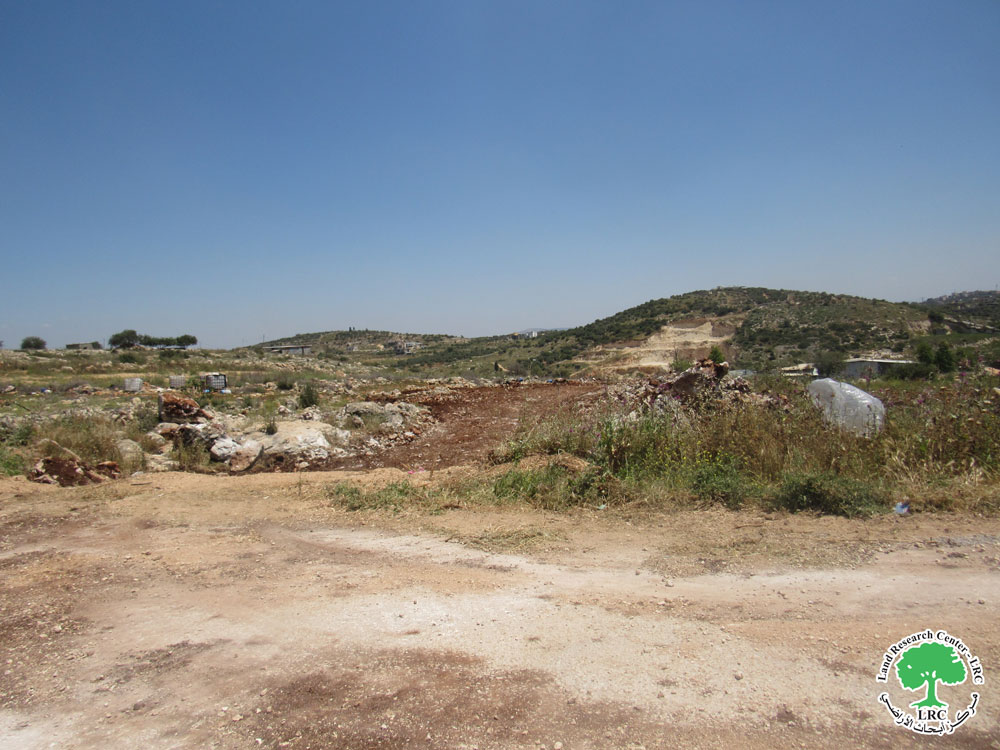
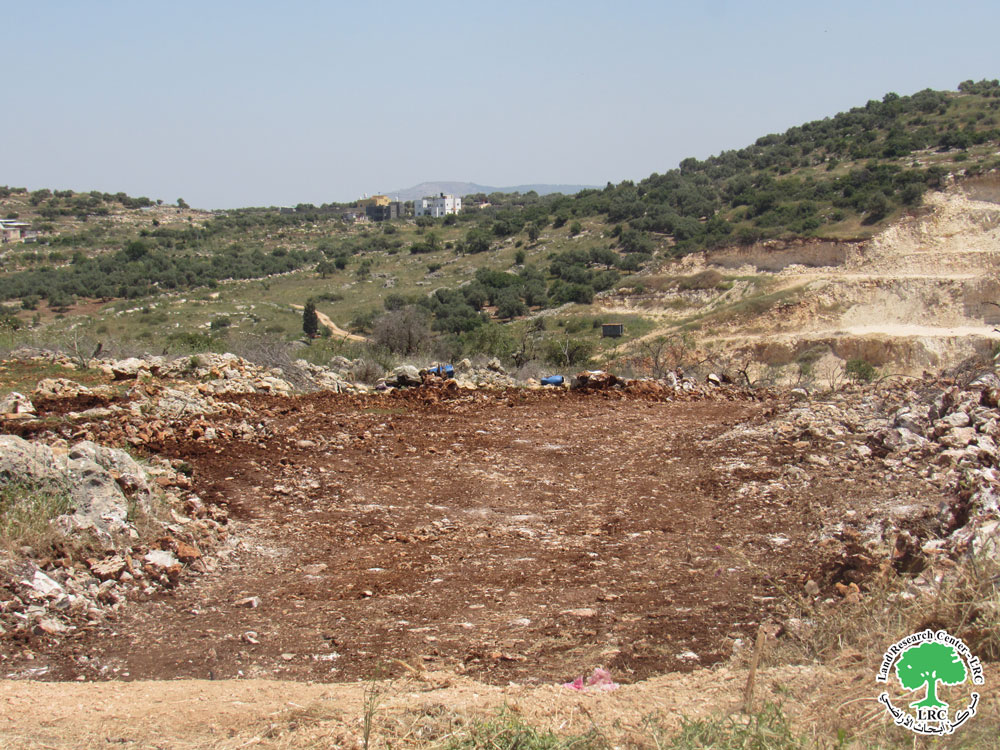
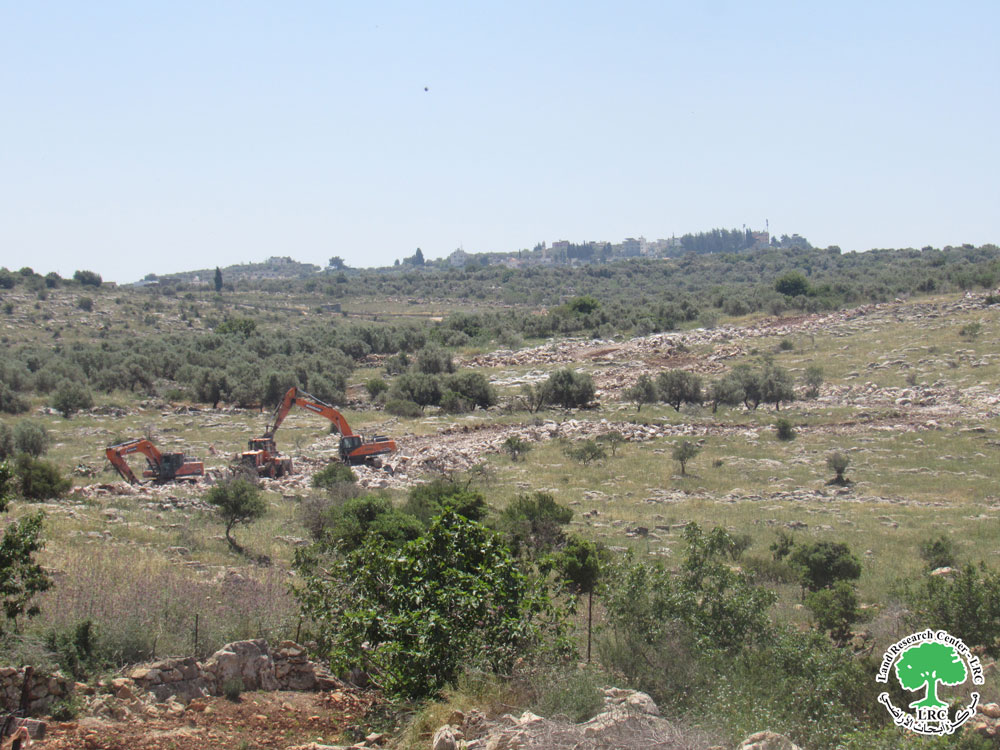
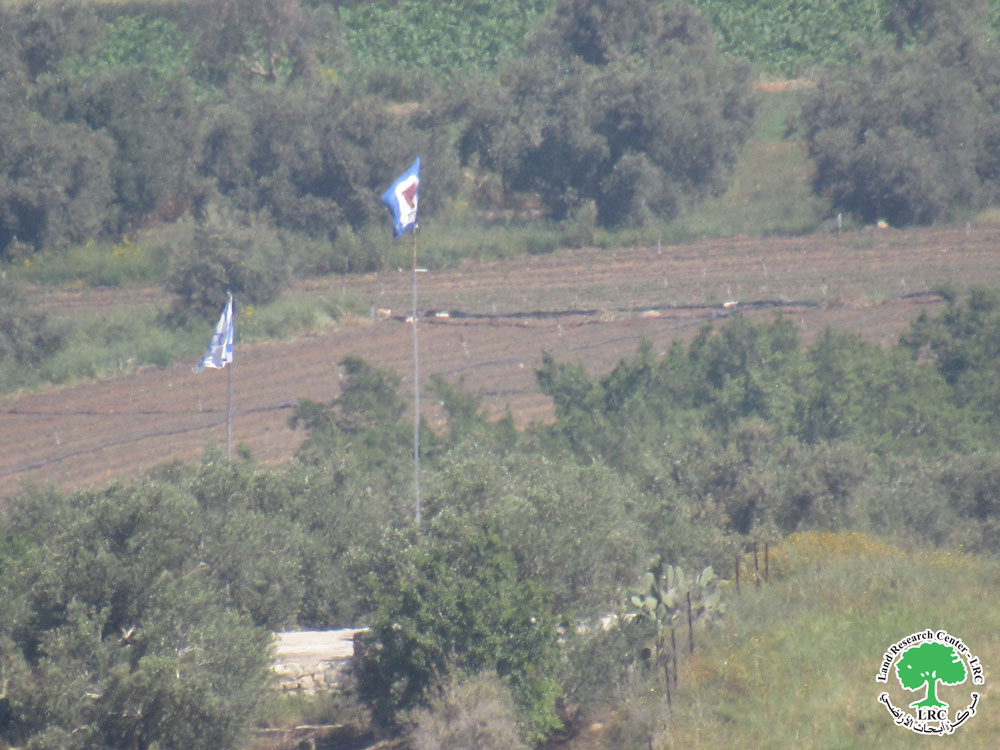
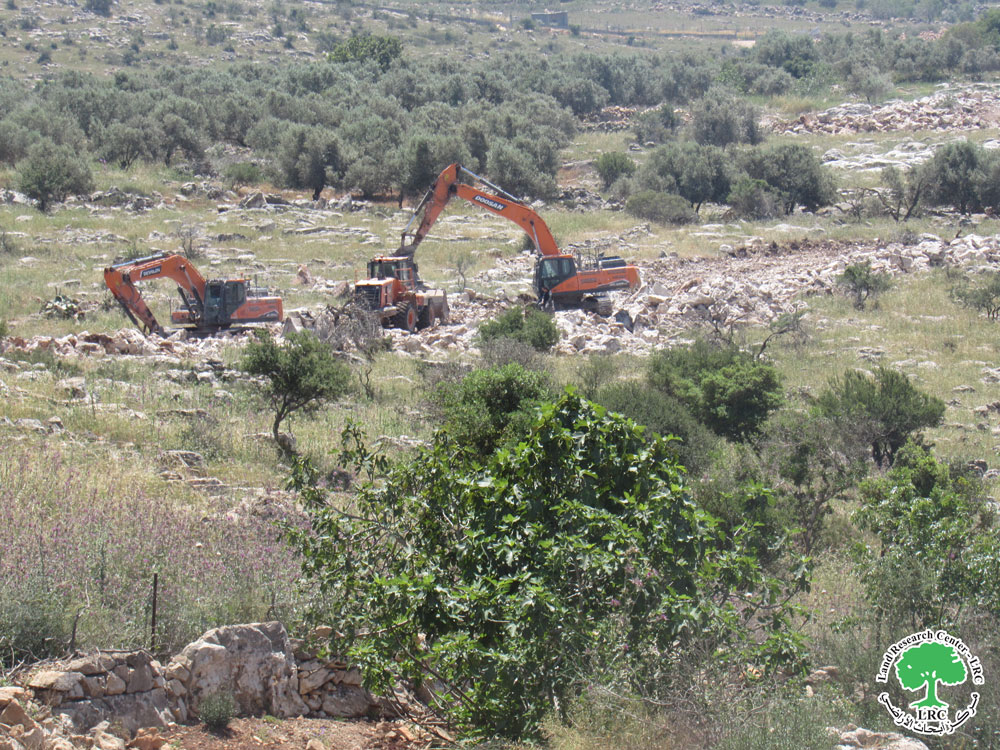
In mid-April 2026, the Israeli occupation authorities suddenly brought four Israeli civilian bulldozers into the targeted area of Khirbet Al-Suruj, where the machinery immediately began extensive land bulldozing works aimed at constructing a new military-colonial road. The road extends from The Annexation and Expansion Wall toward the agricultural lands within the targeted area.
The road construction activities were carried out without any official notification from the occupation authorities, on the grounds that the lands currently being worked on are classified as “Jordanian Hashemite Kingdom Treasury Lands.”
According to field observations, the road remains under construction as of the date of this report. Occupation bulldozers continue extensive excavation and bulldozing operations on lands belonging to Al-‘Araqa village. These works have resulted in the opening of a road segment on lands owned by:
- The heirs of the late Anis Ali Saleh Yahya, affecting approximately 200 square meters belonging to 5 families (35 individuals, including 13 women and 7 children).
- The heirs of Sharif Ali Saleh Yahya, affecting approximately 340 square meters belonging to 7 families (50 individuals, including 25 women and 19 children).
- Farmer Jabri Sharif Ali Yahya, affecting approximately 340 square meters belonging to his family of 9 members, including 5 women and 2 children.
These actions constitute a clear violation of private property rights.
Field evidence indicates that the bulldozing operations aim to establish a network of colonial bypass roads in the area for clear colonial purposes, thereby reinforcing on-the-ground control over the region.
Indicators further suggest that this project extends beyond mere infrastructure development and represents a preparatory step toward imposing new realities on the ground. These measures are expected to completely isolate agricultural lands and prevent farmers from accessing or approaching them in the future, particularly as they fall within the scope of the planned bypass road network.
In this context, several farmers in the area reported, based on their field observations, that occupation forces verbally warned them to remove their agricultural structures and interests from the targeted sites, claiming that the road construction constitutes a precursor to the effective confiscation of the lands, including areas previously rehabilitated and developed through earlier projects implemented by the Land Research Center.
These developments reflect a clear escalation in policies aimed at asserting control over agricultural lands through the use of road projects as a tool to reshape local geography and impose permanent restrictions on land use by their original owners.
Statement by Farmer and Head of Al-‘Araqa Village Council:
Farmer and Head of Al-‘Araqa Village Council, Mohammad Nayef Al-Yahya, stated to the Center’s field researcher:
“Residents were surprised to see bulldozers belonging to the Israeli occupation authorities suddenly operating in the area without prior notice, as these machines immediately began bulldozing and constructing colonial roads extending into agricultural lands.”
Al-Yahya explained:
“The route of the new road actually cuts through agricultural plots that were previously rehabilitated and developed by the Land Research Center in 2012. This directly fragments these lands and opens the door for their future isolation from their owners, effectively paving the way for gradual control over them.”
He further noted that, according to field data:
“This road appears to be part of a broader plan aimed at imposing full control over the Khirbet Al-Suruj area and transforming it into a zone under occupation dominance.”
He added:
“These developments will have a direct impact on livelihoods, as no fewer than 19 farmers who depend on livestock breeding and agriculture in the area are now threatened with losing their primary source of income. In addition, all lands rehabilitated through previous development projects have become directly targeted due to the route of the new road.”
It is worth mentioning that the bulldozing operations are taking place near lands that had previously been rehabilitated and developed in Al-‘Araqa through a project implemented by the Land Research Center in 2012 aimed at improving living standards in the West Bank.
At the time, the project included the rehabilitation of more than 79 dunums of agricultural land, in addition to improving approximately 97 dunums in the same area. The initiative aimed to protect land from degradation, enhance agricultural productivity, and strengthen sustainable agriculture in ways that positively benefit local communities.
Despite this, Israeli occupation authorities classify these lands as “Jordanian Hashemite Kingdom Treasury Lands,” a designation commonly used within the framework of land seizure or land-use restriction procedures. This classification places the lands within the scope of legal and administrative targeting, despite the fact that they are cultivated, developed agricultural lands funded through international development projects.
Previous Violations Documented by the Center:
It is noteworthy that the Government Property Department of the Israeli Civil Administration issued nine military orders on 3 March 2025 ordering the evacuation of approximately 291 dunums of agricultural lands planted with productive olive trees. These lands also included agricultural rooms and rainwater harvesting wells.
The affected areas contained approximately 3,300 productive olive trees, 7 rainwater collection wells, retaining walls, and several simple agricultural structures used by farmers to manage their lands and support agricultural production.
Additional orders were issued on 11 March 2025 targeting another 66 dunums planted with 1,070 olive trees and saplings.
These notifications were issued under the pretext of “encroachment on state lands,” according to the classification declared by the occupation authorities. Farmers were given no more than 45 days to implement the evacuation and removal orders and restore the land to its previous condition.
As a result, farmers faced a direct threat of losing their primary livelihoods, further increasing agricultural instability in the area. The occupation authorities partially implemented these orders by uprooting and bulldozing 1,400 trees on 10 September 2025.
Environmental and Agricultural Impact:
The construction of a new colonial-military road on the lands of Al-‘Araqa village in the Khirbet Al-Suruj area has direct and serious consequences for the environmental and agricultural system of the region.
Such interventions fragment agricultural lands and separate them from one another, hindering their continuous use and weakening the productivity of the remaining cultivated areas.
The ongoing bulldozing operations also destroy the fertile topsoil that forms the basis of sustainable agriculture, in addition to uprooting fruit-bearing trees — particularly olive trees — which constitute a fundamental component of the local ecosystem and a primary economic resource for farmers.
If these actions continue, they are expected to result in a decline in agricultural biodiversity and a deterioration in the land’s regenerative and productive capacities over the medium and long term.
Furthermore, transforming the area into a network of military and colonial bypass roads will effectively close off extensive agricultural areas and prevent access to them, gradually removing them from agricultural production and turning them into buffer zones inaccessible to their original owners.
Legal Context:
These bulldozing operations fall within a broader policy aimed at imposing control over land, constituting a clear violation of international humanitarian law, particularly regarding the prohibition of confiscating private property and the obligation to protect agricultural lands in occupied territories.
The construction of roads serving colonials or altering the geographical character of occupied land is considered contrary to the Fourth Geneva Convention of 1949, which guarantees the protection of civilians and their property under occupation.
Moreover, any permanent alteration in land use or transfer of effective control over land to the occupying power or settlers may constitute an unlawful change to the legal status of the land and falls within the framework of colonial policies prohibited under international law and relevant United Nations Security Council resolutions.
Accordingly, what is taking place in Khirbet Al-Suruj is not merely a field intervention, but rather an international legal issue linked to property rights, the protection of natural resources, and safeguarding the continuity of local agricultural communities.
Khirbet Al-Suruj:
Khirbet Al-Suruj, located west of Al-‘Araqa village southwest of Jenin Governorate, is considered an area of significant environmental and agricultural importance. The region is characterized by remarkable ecological diversity and fertile agricultural lands, which have made it one of the area’s most productive agricultural zones for decades, particularly for olive cultivation.
The area also hosts a number of small and medium-sized agricultural projects that constitute a primary source of income for many families in Al-‘Araqa village and the neighboring town of Al-Yamoun.
Khirbet Al-Suruj carries a historical and agricultural character that reflects an authentic part of Palestinian rural identity. The land is deeply connected to traditional agricultural practices that have continued for generations, enhancing both its environmental and economic value as an area that relies almost entirely on agricultural land use.
However, this environmental and agricultural uniqueness has suffered severe negative impacts since 2000 following the construction of the Separation Wall on village lands. The wall isolated large areas of Khirbet Al-Suruj from their owners and fragmented the agricultural landscape, resulting in direct damage to agricultural production and significantly restricting farmers’ ability to access and cultivate their lands normally.
مشروع: حماية الحقوق البيئية الفلسطينية في مناطق "ج" SPERAC IV - GFFO
Disclaimer: The views and opinions expressed in this report are those of Land Research Center and do not necessarily reflect the views or positions of the project donor; the Norwegian Refugee Council.
إخلاء المسؤولية: الآراء ووجهات النظر الواردة في هذا التقرير هي آراء ووجهات نظر مركز أبحاث الأراضي ولا تعكس بالضرورة وجهات نظر أو مواقف الجهة المانحة للمشروع؛ المجلس النرويجي. للاجئين