2026-03-26
Israeli Colonists Release Cattle into Farmers’ Lands in Wadi Al-Nafakh Area, Al-Burj Village South of Hebron
Violation: Destruction of trees and agricultural crops.
Date: Since February 2026.
Location: Wadi Al-Nafakh area – Al-Burj / Hebron Governorate.
Perpetrators: Israeli colonists.
Victims: Farmers from the Al-Faqeeh family.
Details:
Israeli colonists residing in the pastoral colonial outpost established on lands belonging to the town of Al-Dhahiriya, south of Hebron, continue their attacks against farmers and their lands in the nearby village of Al-Burj. The colonists prevent farmers from accessing their lands to cultivate or maintain them.
Citizen Yousef Al-Faqeeh (41 years old) stated to the LRC researcher:
“I have lived in Al-Burj village for generations. My family — my father and uncles — own a plot of land measuring approximately 100 dunums in the Wadi Al-Nafakh area south of the village. We inherited this land from our ancestors, and we possess all official ownership documents. Due to the nature of the land, around 5 dunums are planted with olive and almond trees that are nearly 50 years old. In addition, about 30 dunums were cultivated with winter crops, legumes, wheat, and barley, while the remaining areas served as grazing lands for our sheep.”
Al-Faqeeh added:
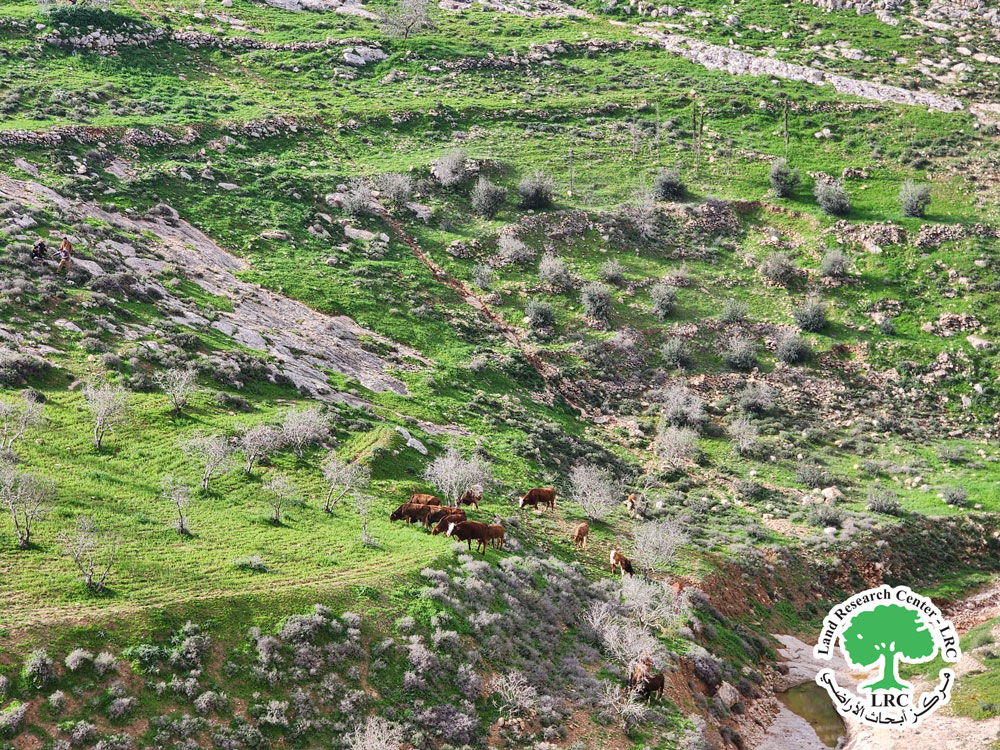
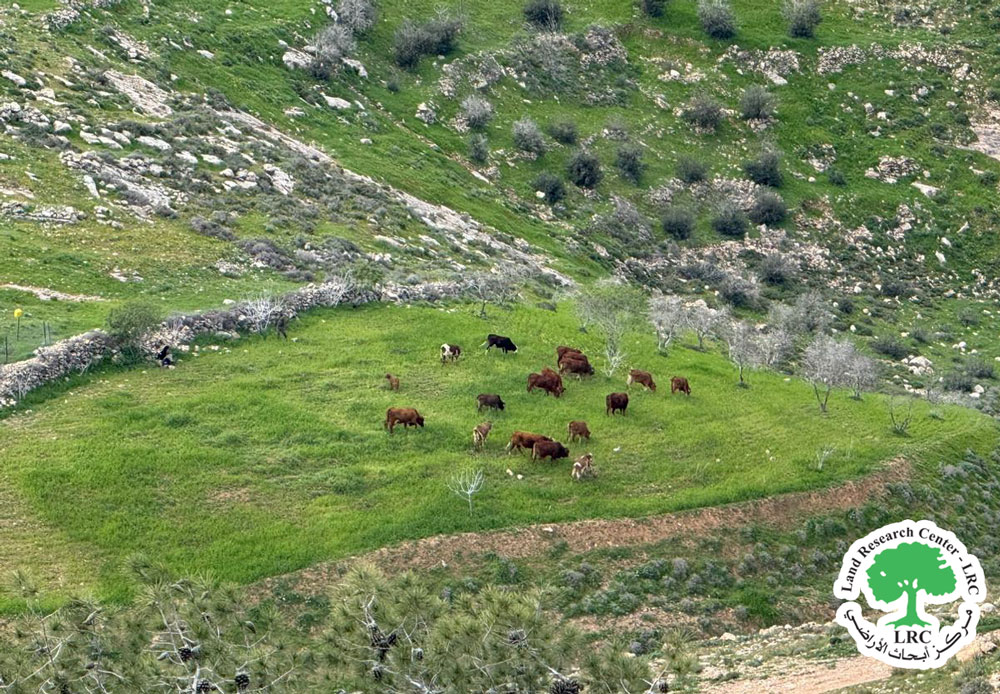
“Since Israeli colonists established their outpost in April 2025 to the east of our lands, about two kilometers away, the colonist shepherds have repeatedly attacked our lands. They release their cattle into the cultivated areas planted with trees, causing severe destruction. Whenever we attempt to reach our lands to inspect or care for them, armed Israeli colonists pursue us and summon the army to the area. They have arrested my brother and father several times.”
Regarding additional damages, Al-Faqeeh explained that his father had rehabilitated a 6-dunum plot of land after the outbreak of the war in October 2023, intending to establish a family farm. He prepared the land at his own expense, fenced it, and planted mature fruit trees. He also constructed an agricultural water cistern to collect rainwater. However, Israeli colonists prevented the family from returning to the land or maintaining it and continue to attack the property.
The affected resident further noted that Israeli colonists also attacked an old agricultural water well located on their lands. He added that his family and relatives own a number of sheep that once grazed freely in these lands, which are now controlled by the colonists. As a result, they are forced to purchase animal feed and keep the sheep confined to their barns, only allowing them to graze near their homes.
Al-Faqeeh stated that these attacks negatively affect around 70 members of his extended family, including 30 children and 25 women.
Legal and Environmental Implications
This attack represents an ongoing pattern of violations against both international humanitarian and environmental law. The destruction of crops and the prevention of farmers from accessing their lands constitute violations of private property rights and livelihoods, prohibited under the Fourth Geneva Convention, which obligates the occupying power to protect civilians and their property and to prevent acts of violence or destruction not justified by military necessity.
Furthermore, releasing livestock into cultivated lands and destroying trees and agricultural infrastructure — including wells and fences — constitutes an assault on natural resources and contradicts principles of environmental protection and land preservation emphasized by the United Nations Environment Programme.
In conclusion, these practices amount to a dual violation: a legal violation targeting property rights and personal security, and an environmental violation through the deliberate destruction of agricultural systems and the sustainability of natural resources.
مشروع: حماية الحقوق البيئية الفلسطينية في مناطق "ج" SPERAC IV - GFFO
Disclaimer: The views and opinions expressed in this report are those of Land Research Center and do not necessarily reflect the views or positions of the project donor; the Norwegian Refugee Council.
إخلاء المسؤولية: الآراء ووجهات النظر الواردة في هذا التقرير هي آراء ووجهات نظر مركز أبحاث الأراضي ولا تعكس بالضرورة وجهات نظر أو مواقف الجهة المانحة للمشروع؛ المجلس النرويجي. للاجئين
The photos below show cattle belonging to Israeli colonists inside the lands of the Al-Faqeeh family in Al-Burj