2026-04-16
After Settler Seizure of Land and Crops: Farmers in Sikka Village, South of Hebron, May Be Forced to Sell Their Livestock
After Settler Seizure of Land and Crops: Farmers in Sikka Village, South of Hebron, May Be Forced to Sell Their Livestock
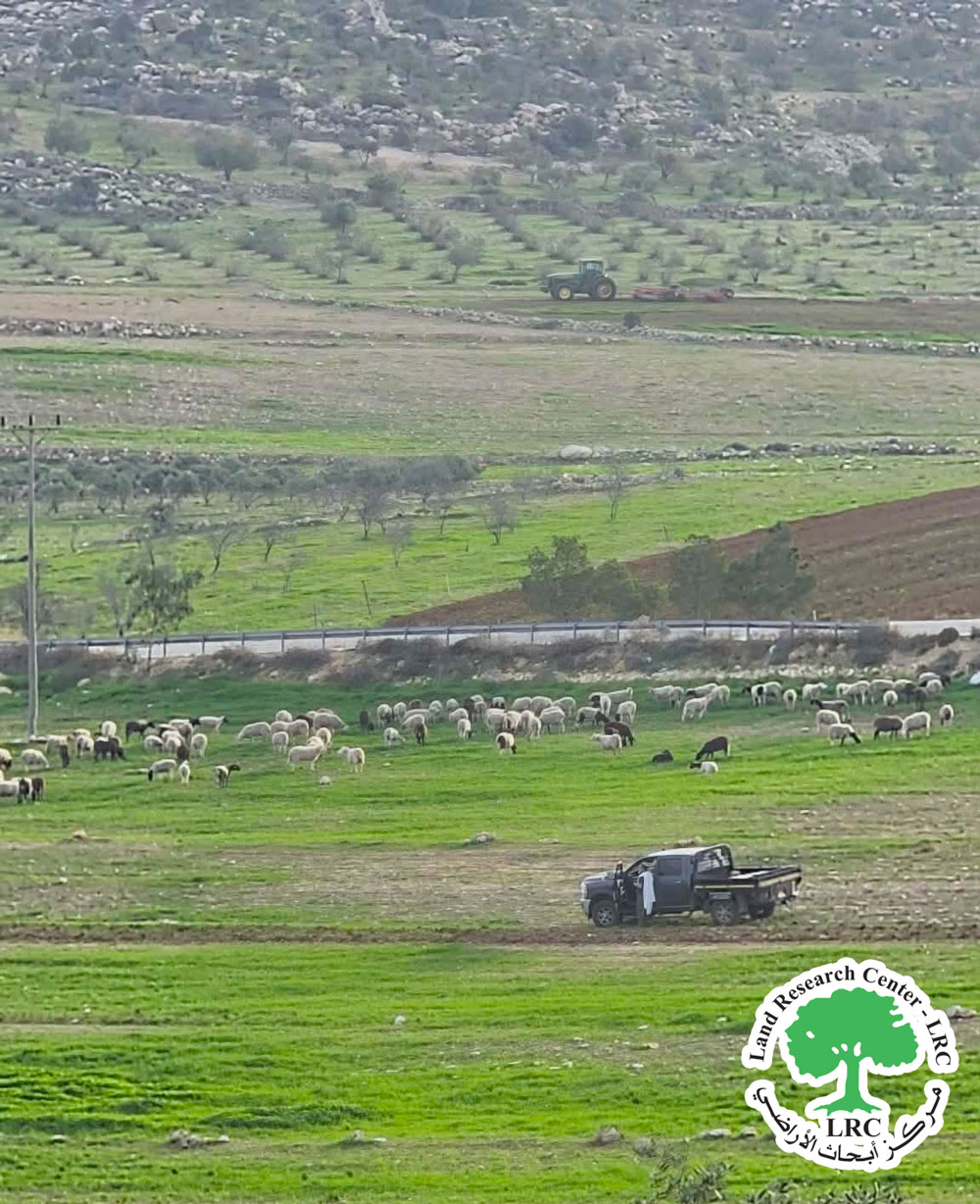
As part of settler attacks on farmers’ lands, particularly targeting winter crop fields, settlers on Wednesday, April 16, 2026, attacked wheat and barley fields and cut them using their machinery. It appears that the goal was to dry the crops for use as fodder for their livestock.
Farmers observed settlers arriving with a tractor equipped with a machine for cutting green crops, and they began harvesting crops in the lands of Sahl al-Buq’a, the area located between Sikka village and Beit Awwa town.
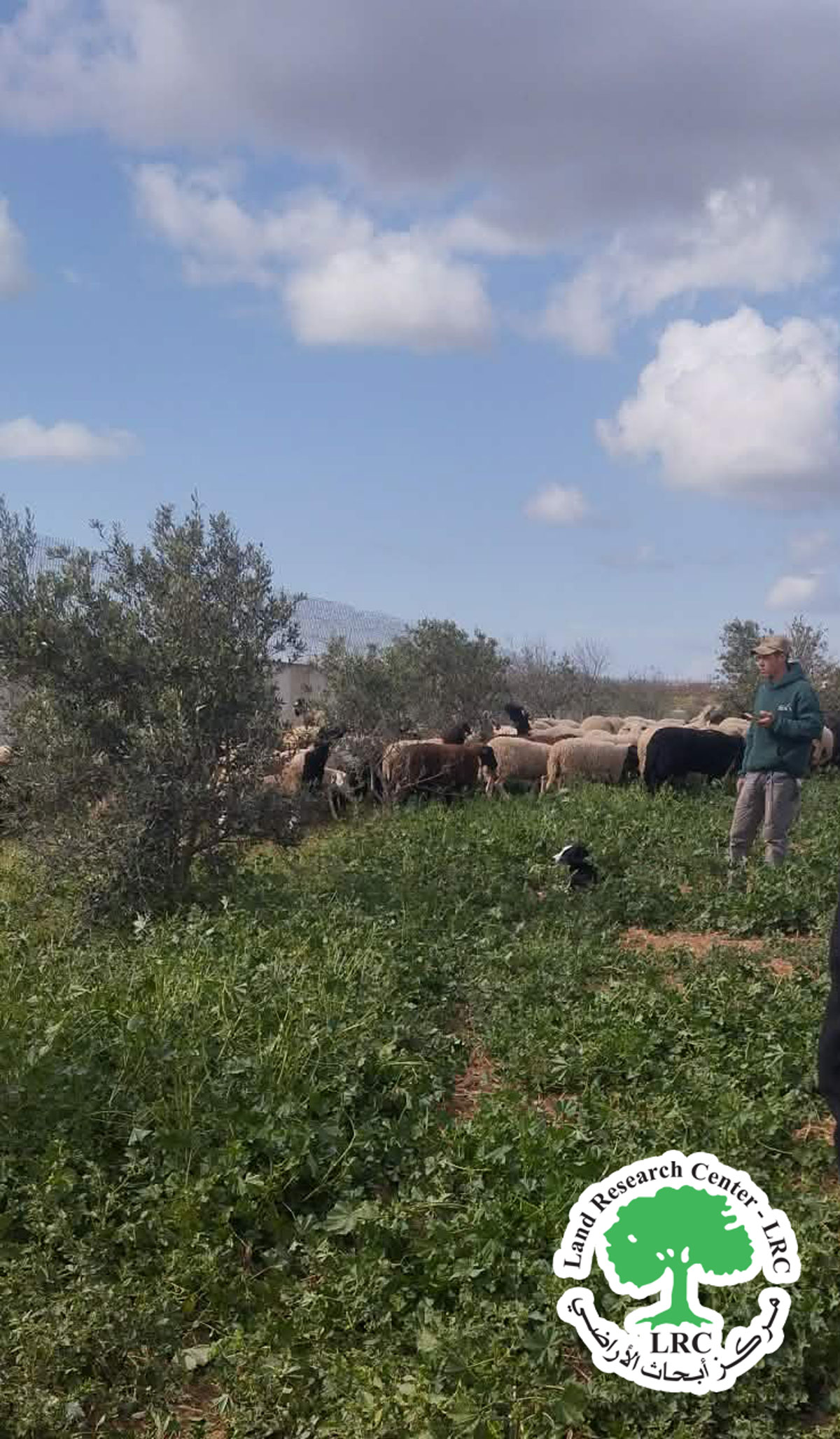
To the east of these communities, there is an ongoing expansion of colonial settlements. The settlements of Negohot and Mirshalim – Givat HaBustan overlook these communities from the eastern side, in addition to a pastoral colonial outpost focused on livestock. Settlers carry out near-daily attacks on the lands of the residents of Beit Awwa and Sikka by grazing on their trees, breaking branches, and grazing on crops, culminating recently in the cutting of crops.
It is clear that the settlers in Sahl al-Buq’a cut the crops and dry them on site, later compressing them into bales similar to dried alfalfa, to use as fodder for their livestock. This practice is highly beneficial for livestock, as green crops dried this way are richer in protein than straw and hay harvested in summer, and are highly sought after by the settlers’ herds.
It is worth noting that cultivating and plowing these lands has not been easy or straightforward. Settlers interfered with farmers at the start of the season, preventing them from accessing their lands, driving many away, and obstructing their tractors. However, because some farmers could not harvest their lands the previous year due to settler interference, and because leftover crops were left in the fields—many of which were grazed by settlers’ sheep—the seeds regrew during this year, which experienced an excellent rainy season.
The Sahl al-Buq’a area covers approximately 500 dunams and is a primary source of field and fodder crops for livestock owners in Sikka, as well as for residents of Beit Awwa and surrounding areas.
Damage to Farmers and Livestock
The 2025/2026 rainy season in Palestinian territories showed a significant improvement compared to previous years, which helped save field crops and orchards and increased land productivity. Farmers welcomed this season; however, farmers in western Dura villages (approximately 10 villages from Sikka to Al-Burj) faced the same challenges as other Palestinian farmers. These villages have an agricultural nature dating back generations, relying heavily on livestock rearing and regular cultivation.
In Sikka, settlers seized lands that were expected to provide bread-producing wheat for local families and controlled crops that would have served as fodder for livestock. These attacks and the deprivation of farmers from their crops and the yields of their lands occurred amid a strict economic blockade imposed on Palestinian territories for around three years, along with a global economic crisis that drove prices, including fodder prices, to extreme highs.
Therefore, settlers have significantly contributed to intensifying the economic siege on Palestinian farmers, depriving them of essential agricultural resources. They have effectively replaced Palestinian farmers and herders with settler farmers and livestock, prioritizing fodder for settler livestock over that of Palestinian farmers.
Numbers and Statistics
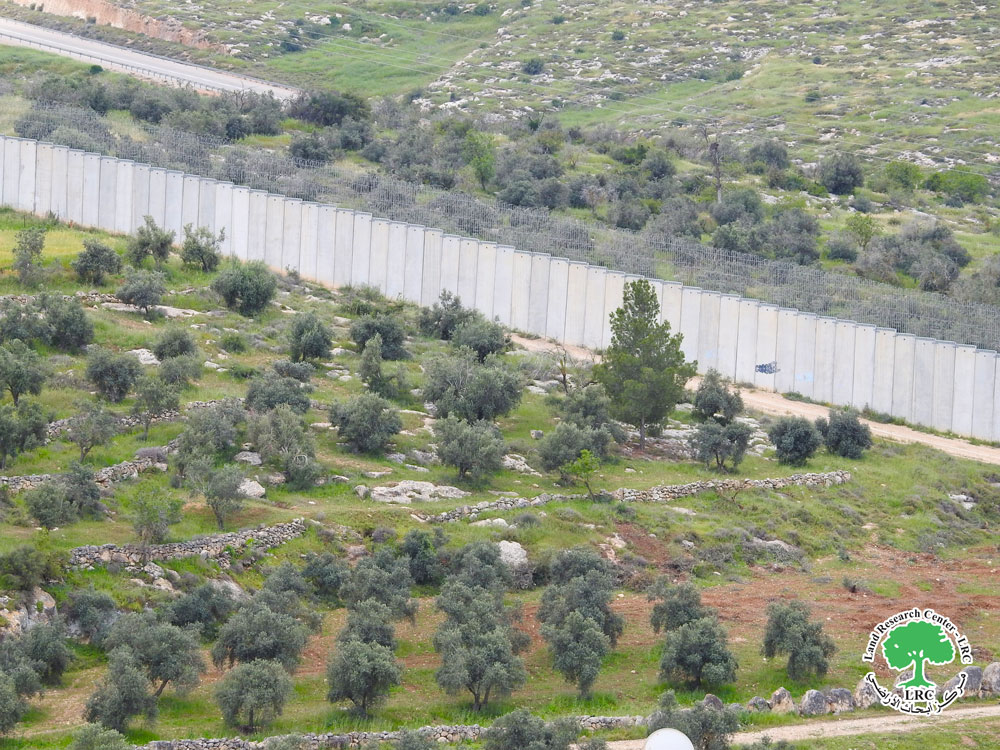
Sikka village is one of the communities surrounded by settlements and the annexation-expansion wall. From the east, the village is overlooked by two settlements and a pastoral outpost. Recently, there have been reports of Israeli authorities approving the establishment of a new settlement to the east. From the west, the annexation-expansion wall cut into the village lands, seizing areas and 25 dunams of olive groves belonging to ten farmers. Additionally, the northern side is bordered by a bypass road serving the settlers, a military observation tower, and gated road closures.
According to statistics and documentation from the Sikka-Tawas Village Council in June 2025, Israeli authorities prevented 23 farmers from accessing or cultivating approximately 170 dunams of fertile red-soil land.
The council also documented that settlers grazed their livestock on approximately 180 dunams that owners had managed to plow and cultivate despite threats, causing damage to these lands. Furthermore, the authorities obstructed 36 farmers from accessing their lands during the 2025 olive harvest, especially plots along the wall, the bypass road, or near the military observation tower.
Statistics also indicate that 48 residents of Sikka and Tawas collectively own about 400 heads of livestock, the vast majority of which depended on lands that settlers seized, grazed, or harvested for their own animals.
Livestock Owners: “We Will Have to Sell Our Livestock”
- Muhareb al-Amarin, who owns around 100 sheep and has lived in Sikka for about 15 years, used to graze his flock and cultivate large plots of land. Due to constant settler harassment and attacks on his lands, he was forced to move to a distant area seeking pasture and safety for his family and livestock.
- Kholoud Jawa’ada, who owns 10 sheep to support a family of five (including two school-aged children) and cultivates 8 dunams, stated:
“I planted 2 dunams with vetch and 6 dunams with wheat and barley, hoping to provide fodder for my sheep and avoid buying expensive commercial feed. But settlers grazed on the vetch and trampled it, and more recently, grazed on the wheat and barley crops. With summer approaching, I cannot provide fodder for my livestock. I started this project seven years ago and worked to increase my flock, but under the current circumstances and settler control of pastures and crops, I will be forced to sell my entire flock or sell part to feed the rest.”
Jawa’ada appealed to relevant authorities to support farmers and provide fodder under these conditions, noting that livestock raising is her primary livelihood.
- Husam Muhammad Jawa’ada, who owns about 20 sheep with his relatives, also called for assistance to farmers and livestock owners. He noted that loss of pasture and settler attacks may force him to sell his flock, reducing the village’s livestock population. He emphasized that livestock rearing is a peaceful way for farmers to maintain a daily connection with their land.
Conclusion
Farmers face a severe crisis following repeated settler attacks, which include cutting wheat and barley crops for use as fodder for their livestock. These lands, especially in Sahl al-Buq’a (around 500 dunams), are the primary source of food and fodder for livestock owners. Repeated attacks and restricted access have caused significant losses in crops and pastures, despite a favorable rainy season. Consequently, many farmers are unable to provide fodder and may be forced to sell their livestock. Statistics indicate that dozens of farmers and hundreds of dunams of land are affected, directly threatening the livelihoods of many families that depend on agriculture and livestock in a challenging economic and siege context.
مشروع: حماية الحقوق البيئية الفلسطينية في مناطق "ج" SPERAC IV - GFFO
Disclaimer: The views and opinions expressed in this report are those of Land Research Center and do not necessarily reflect the views or positions of the project donor; the Norwegian Refugee Council.
إخلاء المسؤولية: الآراء ووجهات النظر الواردة في هذا التقرير هي آراء ووجهات نظر مركز أبحاث الأراضي ولا تعكس بالضرورة وجهات نظر أو مواقف الجهة المانحة للمشروع؛ المجلس النرويجي. للاجئين