2025-03-02
Establishing a New Colonial Road … Settlers in ‘Revava’ Begin to Bulldoze Agricultural Lands in Haris village / Salfit governorate
Violation : Bulldozing agricultural lands to establish a new colonial road
Location : Haris village/ west of Salfit governorate
Date : March, 2nd, 2025
Perpetrators: Settlers
Victims: 3 families in particular and residents of the village
Details :
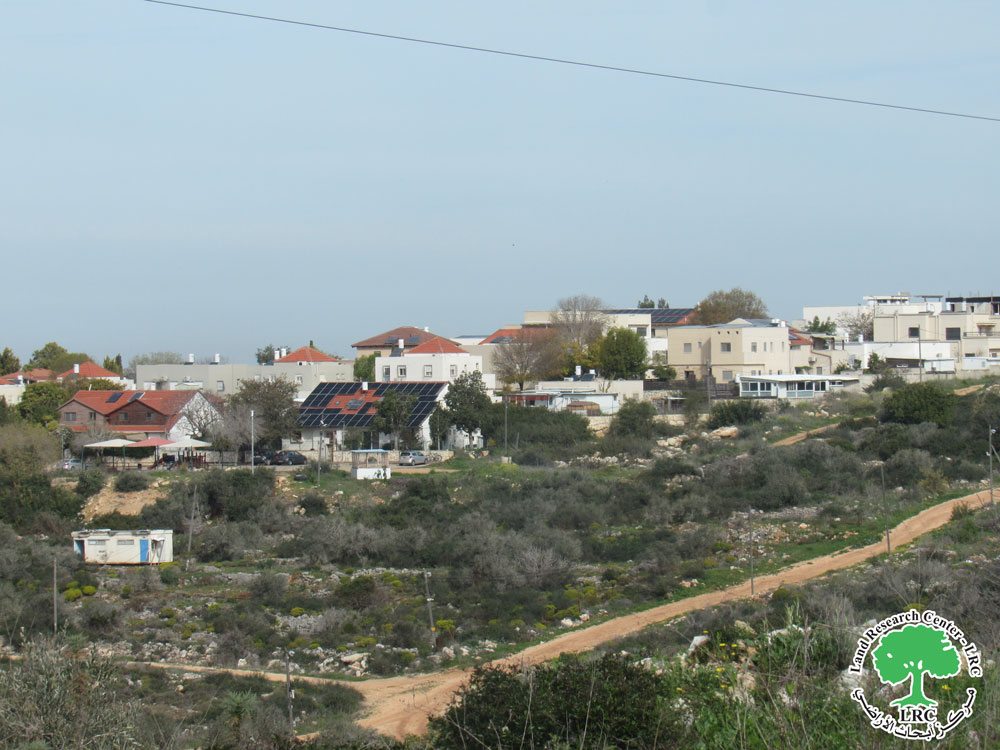
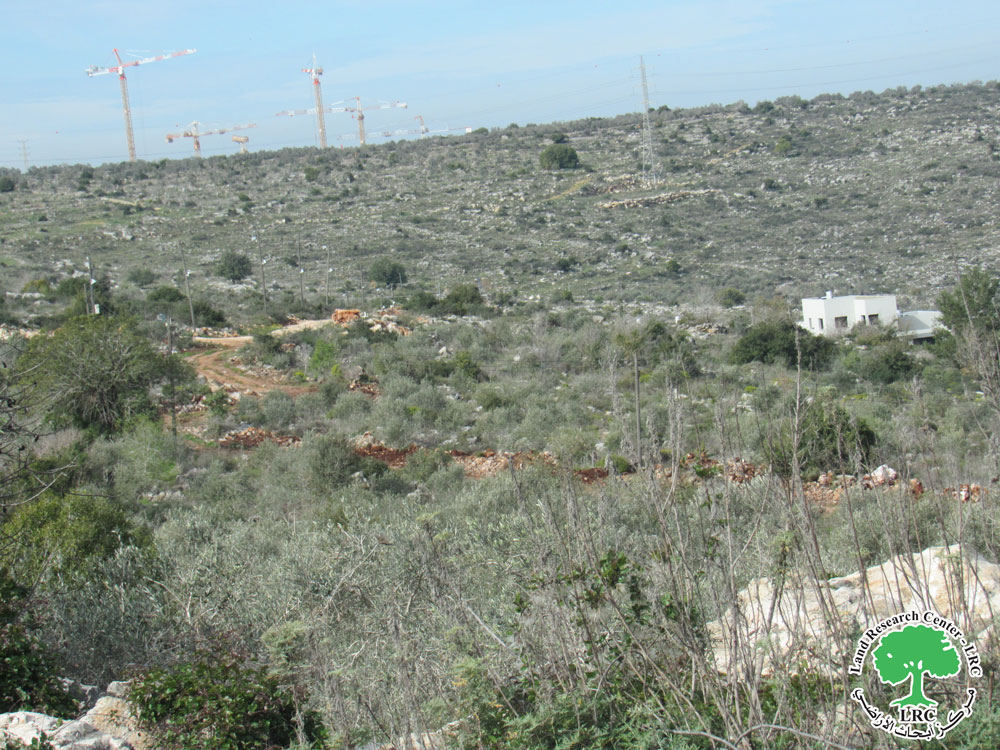
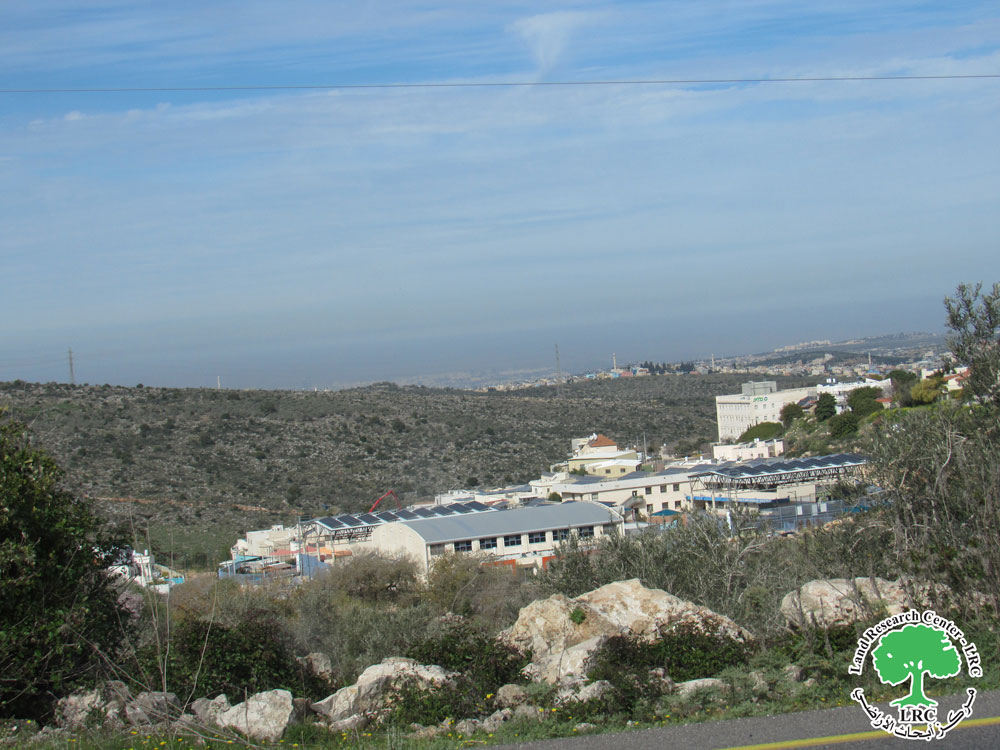
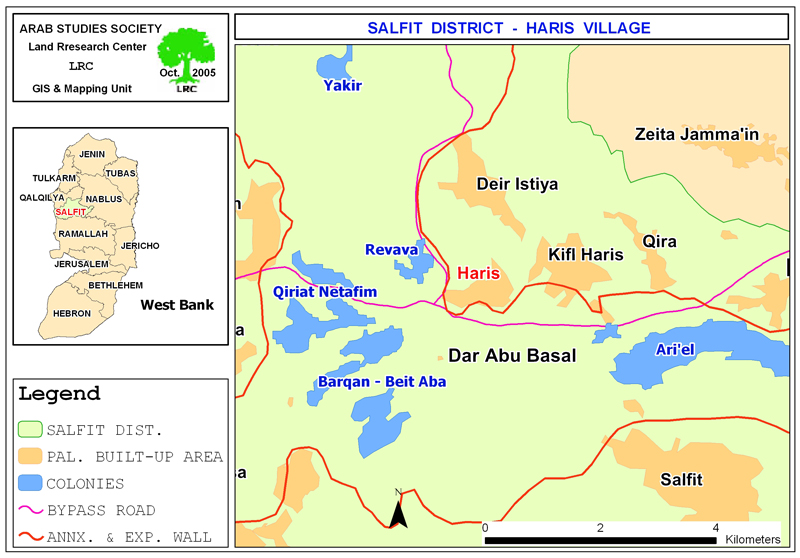
In the early hours of Sunday, March, 2nd , 2025, settlers from ‘Revava’ settlement, located on the land of Haris village , west of Salfit. Began bulldozing the village’s lands using three bulldozers owned by them. The land clearing took place specifically in the areas of wadi al Ruba’ and khallit al Tuffah, located to the west of the village. The goal was to construct a colonial road connecting the ‘Revava’ settlement to the bypass no. 505, with a length of 800 meters and width of 30 meter. The road passes through private lands owned by farmers from Haris village.
According to field monitoring at the site of the violation, it appears that the settlers, as part of a of plan to expend the’ Revava ’ settlement and push towards the bypass road, began constructing this road, during the land- clearing process, nine olive trees were uprooted.
The following table shows the details of the damages :
Affected farmer | Number of Family members | Number of Females | Number of children | Area in dunams | Number of trees that were uprooted |
Bahaa Abdallah Mahmoud Qassem | 5 | 2 | 3 | 6 | 5 |
Hassan Odeh Sultan | 4 | 2 | 0 | 1 | 2 |
Aisha Mohamoud Qassem | 2 | 1 | 0 | 2 | 2 |
total | 11 | 5 | 3 | 9 | 9 |
For his part, farmer Qassem informed the researcher at the LRC :
‘’On November 3, 2024, several months ago, we were surprised by the bulldozing activities and the settlers resuming the destruction of our lands. the settlers, using the same method, began constructing a colonial road on our lands in another nearby area, namely al Tayarat area. At least 60 fruitful olive trees were destroyed by the settlers’ machinery, and all of this took place under the protection of the Israeli occupation forces. We attempted to reach our lands at that time, but the Israeli army confronted us and prevented us from approaching. We entrusted and field a cause through the wall and settlement resistance committee for follow- up, but until now, no results have been issued.’’
He added :
‘’ Before the war on Gaza, the farmers used to reach our lands to take care of it, and we would harvest the olive crops without any problem. However, since the outbreak of the war and until the date of this report, we have been unable to access our lands or harvest the olives. The colonizers have taken advantage of this situation by starting to bulldoze the land and construct colonial roads, all under the protection of the occupation forces.’’
It is worth mentioning that the field research team at LRC, had previously documented a number of violations related to the land levelling activities caused by both the occupation and the colonizers, with the aim of controlling the lands of Haris village for the benefit of ‘Revava’ settlement. In reality over the past 15 years, we have observed that ‘’ Revava’’ settlement has increased fivefold in size, and several roads have also been opened by the colonizers, contributing to the expansion of that settlement.
Haris Village:
Haris village is located to the northwest of Salfit city, approximately 6 kilometers away. The total area of the village is 8,450 dunams, with the built-up area of the village itself covering around 320 dunams. It is bordered to the north by Deir Istiya, to the east by Kifl Haris, to the southwest by Bruqin and Kafr al-Dik, and to the west by Qarawat Bani Hassan.
The population of the village is around 4,137 people, according to the Palestinian Central Bureau of Statistics in 2017. The families residing in the village include: Abu Ata, Dawood, Salama, Sultan, Shhadeh, Soof, Awad, Faza, Qasim, and Klib.
Haris village stands as a living witness to the harshness and brutality of the Israeli occupation, as the colonial "Route 505" was established on its fertile agricultural lands. This road stretches for 4 kilometers and connects the Green Line to the heart of the occupied West Bank.
Attacks on Trees: A Form of Israeli Violations Against the Palestinian Environment :
The frequency of attacks by settlers and the Israeli army on Palestinian trees has been escalating. According to the field research team at the Land Research Center, the occupation forces targeted more than 59,740 trees and saplings from the beginning of 2024 until October 31, 2024—marking the highest number in the past decade. Of these, 90% were completely destroyed, signaling a dire environmental catastrophe.
The loss of trees—whether through cutting, burning, or poisoning—results in a reduction in the number of trees, which in turn shrinks the vegetative cover. This vegetation plays a vital role in supplying the region with significant amounts of oxygen while removing carbon dioxide. Furthermore, the loss of trees leaves animals unable to find shelter and food, posing a threat of extinction to some species due to the destruction of their natural habitats. This negatively impacts biodiversity, exacerbating the environmental harm.
Related links :
- To Construct a Colonial Agricultural Road, the Occupation Uproots 62 Olive Trees in Haris Village/ Salfit Governorate
- Bulldozing of Four Dunams Planted with Olive Trees to Expand the "Revava" Settlement on the Lands of Haris Village / Salfit Governorate
مشروع: حماية الحقوق البيئية الفلسطينية في مناطق "ج" SPERAC IV - FCDO
Disclaimer: The views and opinions expressed in this report are those of Land Research Center and do not necessarily reflect the views or positions of the project donor; the Norwegian Refugee Council.
إخلاء المسؤولية: الآراء ووجهات النظر الواردة في هذا التقرير هي آراء ووجهات نظر مركز أبحاث الأراضي ولا تعكس بالضرورة وجهات نظر أو مواقف الجهة المانحة للمشروع؛ المجلس النرويجي. للاجئين
Bulldozing areas